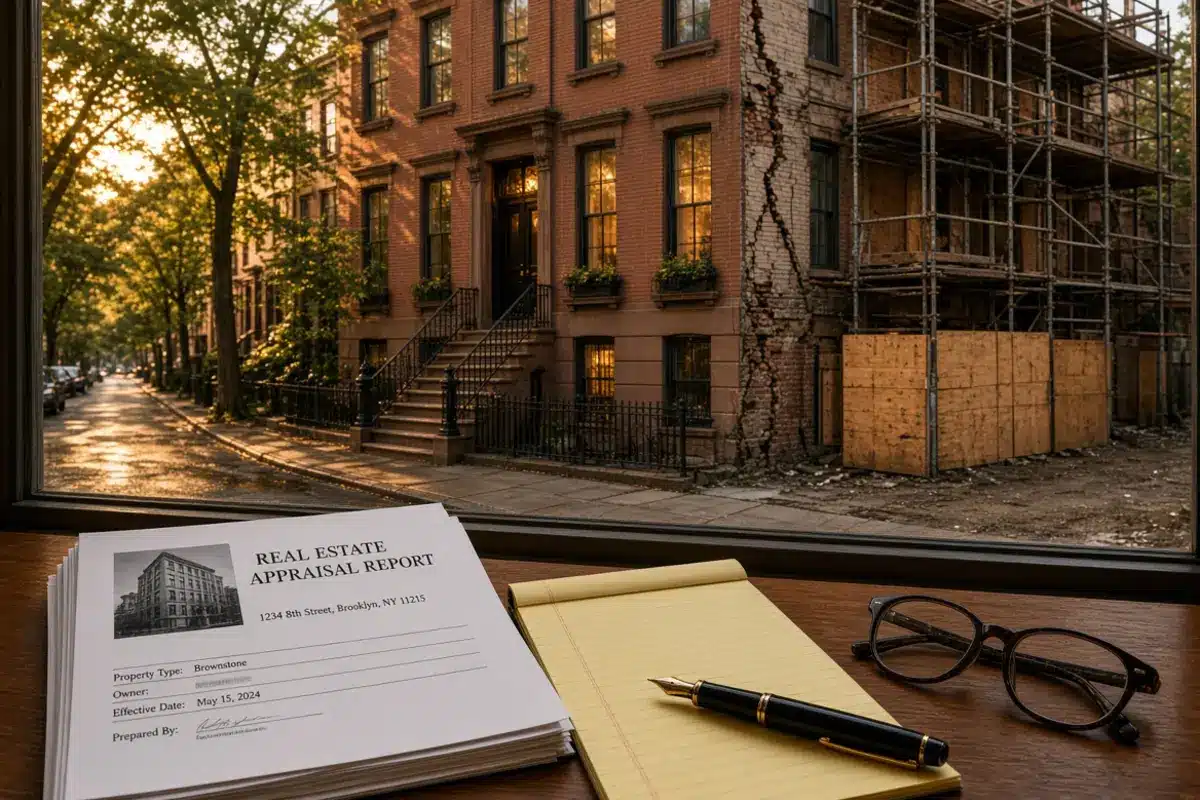
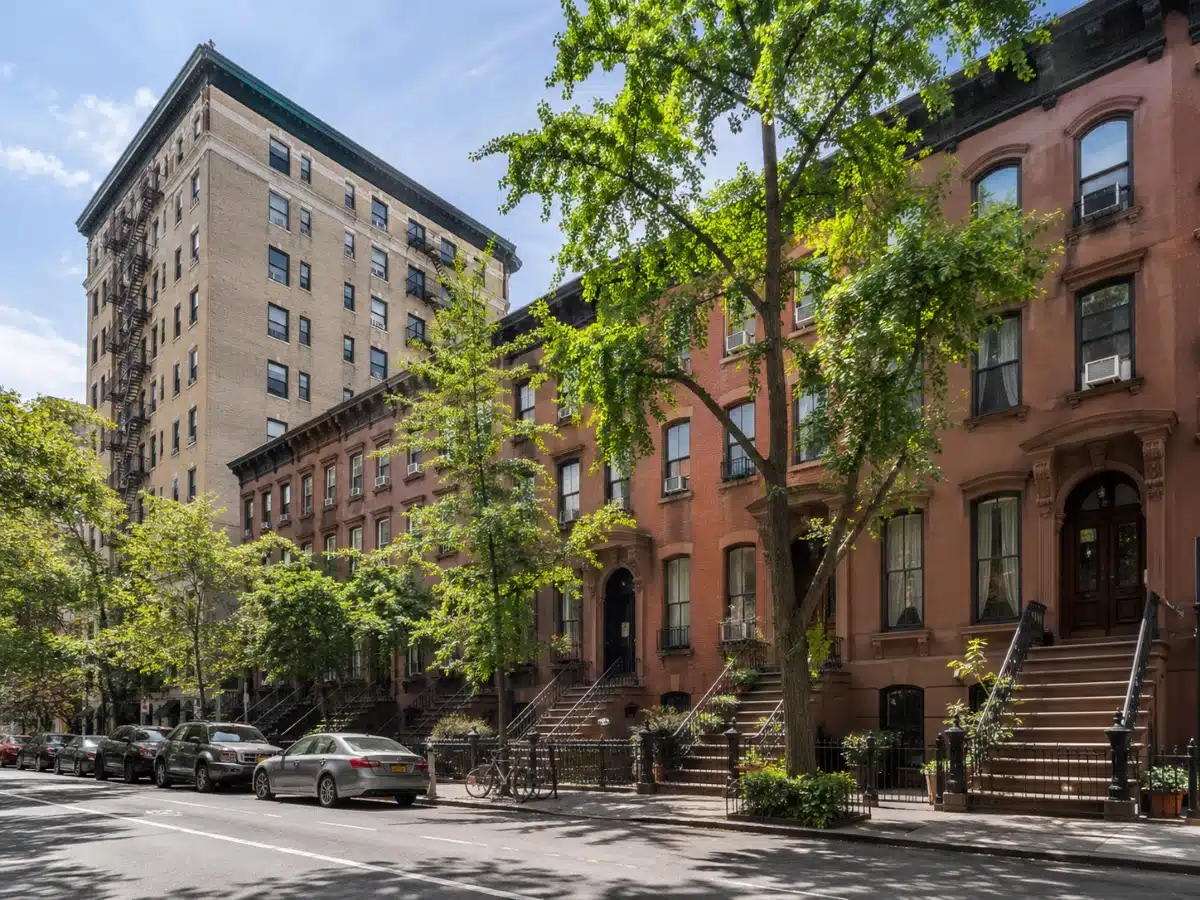
In New York City, the square footage in public records almost never matches what an appraiser measures on site, and the gap is usually bigger than people expect. The reason is simple. The city’s tax records, an old offering plan, and a broker’s listing each came from a different source, used a different method, and were recorded in a different decade. Only one of them measures the space you actually walk through.
A square footage discrepancy is the difference between a size listed somewhere (city records, a co-op or condo offering plan, a listing) and the size an appraiser measures in person. In NYC, those numbers come from different rules and different eras, so a few hundred feet of disagreement is normal, not proof that anyone lied.
I’ve pulled Department of Finance figures that were off from the real layout by a couple hundred feet, in both directions. That’s why I tell every client to start with a measurement from a certified NYC appraiser before they price, lend against, or argue over a number.
Why Do NYC Square Footage Numbers Disagree So Often?
They disagree because no single rulebook covers all of them. The city measures for taxes, developers measured for sales, and appraisers measure for lenders and courts. Three goals, three numbers for the same apartment.
How Do NYC Public Records Get Their Square Footage?
Most square footage in city records traces back to building plans, a Certificate of Occupancy, or a mass estimate, not a recent measurement. The Department of Finance organizes data by Borough-Block-Lot number, and you can pull filings through ACRIS, the city’s public records system. The number shown is usually a building’s gross area, which can fold in hallways, mechanical rooms, and walls. The city even concedes its gross figure may not reflect a lot’s actual floor area. Co-ops get stranger: an owner holds shares in a corporation, not real property, so the sale records as a share transfer and often never appears in ACRIS at all. That’s one reason a co-op appraisal never leans on city records. It helps to know what public property records actually include before you trust a single line in them.
Renovations, Combined Units, and Unpermitted Work
Square footage drifts the moment someone changes a space without updating the record, and in NYC that happens constantly. Two apartments get combined but the lot still reads as two units. A cellar gets finished into space an appraiser can’t legally count. A townhouse has seen three renovations since its last filed plan, none of them on paper. Work done without permits rarely reaches the Department of Buildings, so the file and the floor plan drift apart. An old set of plans tells you what a space was meant to be, not what it is.
Which Measurement Standard Applies in NYC?
This is where NYC splits from the rest of the country. For a house or townhouse with a conventional mortgage, the appraiser has to follow one national rulebook, the ANSI Z765-2021 standard. Fannie Mae has required it on appraisals inspected on or after April 1, 2022, and reaffirmed it in 2025 guidance as the industry moves to a new report format. ANSI is strict. You measure to the outside of the walls, round to the nearest whole foot, count stairs on the floor they descend from, and report below-grade space such as a garden level or cellar separately from the living area. Two-story openings don’t count.
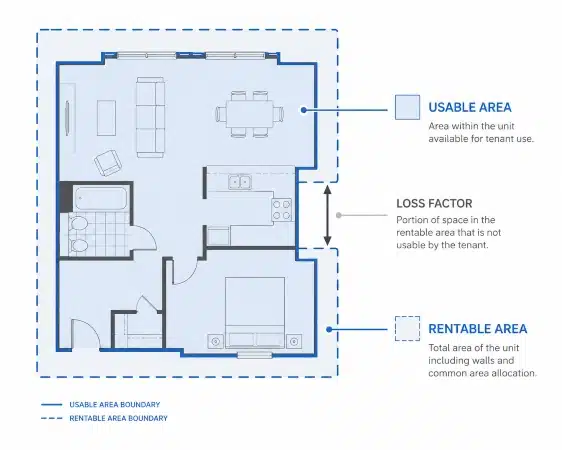
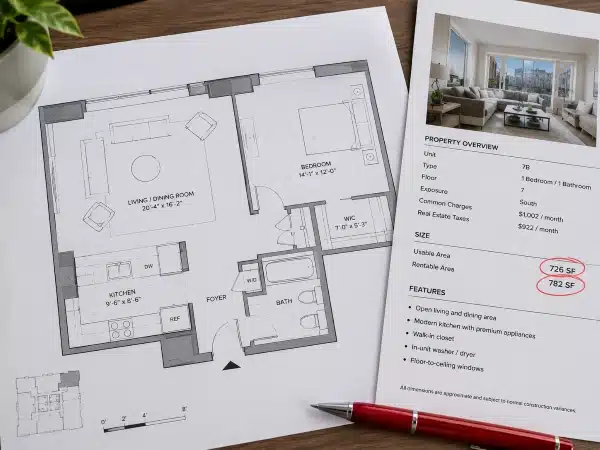
Co-ops and condos play by different rules, and that’s the heart of the NYC problem. ANSI doesn’t apply to them. Their square footage usually comes from the offering plan, measured however the developer chose. The Real Estate Board of New York says so plainly: co-op plans filed with the state can be out of date, and condo offering plans use inconsistent methods, some counting hallways and bathrooms, some not. Apartments also carry a loss factor, the gap between the usable space inside your walls and the marketed number that includes a share of common area. On a single Manhattan office floor that gap often runs near 27 percent, and apartments carry their own version. So a unit marketed at 1,000 feet can leave you a few hundred fewer to use, which is why a condo appraisal starts with a fresh measurement, not the plan.
Where NYC square footage numbers come from:
| Source | What it measures | How current | Reliable for a sale, loan, or court? |
|---|---|---|---|
| City tax records (Dept. of Finance) | A building’s gross area, often with common space folded in | Built from plans, a C of O, or a mass estimate; rarely re-measured | Low for a single unit; the city itself says it may not match actual floor area |
| Offering plan (co-op or condo) | The developer’s measurement at construction or conversion | Frozen when the plan was filed; ignores later renovations | Inconsistent; methods vary by developer, may include halls or baths |
| Broker listing | Whatever number the agent was handed | As current as the agent’s source, often one of the above | Unverified unless backed by a measurement |
| Appraiser’s measurement | On-site measurement to a defined standard (ANSI for houses and townhouses) | Measured the day of the inspection | Yes; this is what lenders and courts rely on |
The most common advice here is also the most dangerous. Telling a seller to just check the tax records or the listing site is how NYC deals fall apart at the appraisal. Those numbers are starting points, not facts.
What Does a Square Footage Discrepancy Cost in NYC?
More than almost anywhere, because the price per foot is so high. A small percentage difference in size turns into a large dollar difference fast.
Pricing a Sale or Setting the Rent
Price off the wrong number and you lose either way. List a unit larger than it measures and buyers (and their appraisers) catch it, the place sits, and you cut the price anyway. List it smaller than it is and you hand money to the buyer. Because NYC price per foot runs so high, even a 150-foot overstatement can push the asking price above what an appraiser will support and trigger a re-trade. The same logic holds for rent, where the number per foot has to match what a tenant actually gets.
Refinances and Mortgage Appraisals
When you refinance, the lender’s appraisal is the number that counts, not the listing or the tax record. If the appraiser measures less than your file shows, the value can land lower than you hoped, which shrinks how much you can borrow. This bites hardest on combined apartments and renovated townhouses, where the owner is sure of a figure the measurement won’t support. Walking in with a professional property measurement in NYC means no surprises when the bank’s appraiser arrives.
When Square Footage Ends Up in a Dispute
Square footage becomes a legal problem more often than you’d guess. A buyer who finds the place is smaller than advertised can claim misrepresentation. In a divorce, both sides need an apartment value they can defend. Settling an estate means valuing the property as of a specific date. In each case, a measured, standard-based number holds up where a tax record or a listing won’t.
How Do You Get Accurate Square Footage in NYC?
Stop trusting the paper and measure the space. That’s the answer, and it costs far less than the mistakes it prevents.
Get a Professional Measurement
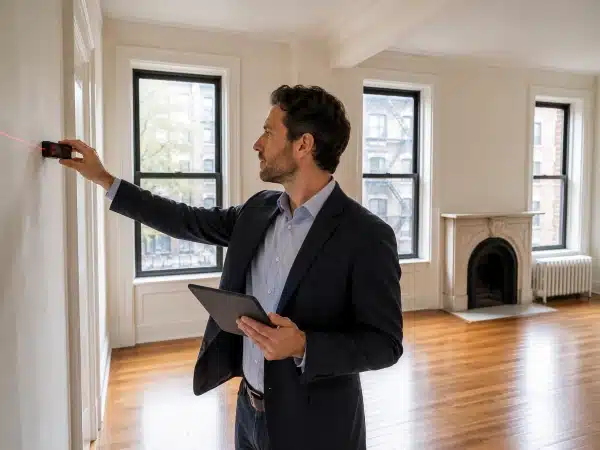
A measurement from a licensed appraiser gives you a number you can list, hand to a lender, or defend in court. Do it before you list, before you refinance, when you’re fighting a property tax bill, or any time the records look off. If you want to see how the measurement actually works, it’s a methodical on-site process, not a guess.

How to Check and Fix Your NYC Public Records
You can do some of this yourself. Look the property up by its Borough-Block-Lot number on the Department of Finance portal and check the gross square footage and unit count on file. If a renovation or a combination never made the record, you’ll often spot the gap. Fixing it means bringing the city proof: permits, plans, or a new measurement. Timelines vary by case, and co-ops are their own maze, since there may be no unit-level record to correct.
What Owners and Agents Should Actually Do
If you’re an agent, name your source. A listing that says square footage is per the offering plan or per tax records, not a measurement, protects you and sets expectations. Verify with a measurement on anything where size drives the price, and walk clients through why the numbers differ instead of hoping nobody asks. Getting the size right is one job.
The Number That Holds Up
The number on a city record or a listing isn’t wrong on purpose. It’s answering a different question than the one you’re asking. The city wants a tax figure, a developer wanted a sales figure, and you need the one that survives a buyer’s scrutiny, a lender’s underwriting, or a judge’s review. In NYC, the only square footage that holds up is the one someone actually measured. Get that done first, and the price, the loan, and the negotiation all stand on something real.
FAQs
Why is the square footage in NYC public records different from the appraisal?
City records usually report a building’s gross area built from old plans, a Certificate of Occupancy, or a mass estimate, while an appraiser measures the actual space on site. Since April 1, 2022, appraisers on Fannie Mae loans must follow the ANSI Z765-2021 standard, which often produces a different, smaller living-area number than the public record.
Does a finished basement count in NYC square footage?
Under the ANSI standard that mortgage appraisers use, no. Space that is partly or fully below grade, like a cellar or garden level, is reported separately as below-grade area, not as part of the above-grade living area, even when it is fully finished.
Is the appraiser’s measurement or the public record more accurate in NYC?
For a sale, a loan, or a court case, the appraiser’s on-site measurement is the number that counts. Public records exist for taxes and are often years out of date. The Department of Finance even notes its gross square footage may not reflect a lot’s actual floor area.
How do I correct wrong square footage in NYC property records?
Look the property up by its Borough-Block-Lot number on the Department of Finance portal, then submit proof of the correct size, such as permits, architectural plans, or a new professional measurement. Timelines and steps vary by case, and co-op units may have no individual record to fix.
How much does a square footage discrepancy affect value in NYC?
A lot, because NYC price per foot runs so high that a small error in size becomes a large swing in value. Even a modest overstatement can push a listing above what an appraiser will support and force a price cut or a bigger buyer down payment.
What measurement standard do NYC appraisers use?
For single-family homes and townhouses on conventional mortgages, appraisers use the ANSI Z765-2021 standard, required by Fannie Mae since April 1, 2022. Co-ops and condos are not covered by ANSI, so their square footage usually comes from the offering plan, which is why those numbers vary so much.
Should I get a property measurement before listing or refinancing in NYC?
Yes, especially if you are relying on old records or the unit has been renovated or combined. A professional measurement is a small cost next to the value at stake, and it removes the biggest variable before a buyer’s appraiser or a lender’s appraiser sets the number for you.
[hfcm id=”152″]