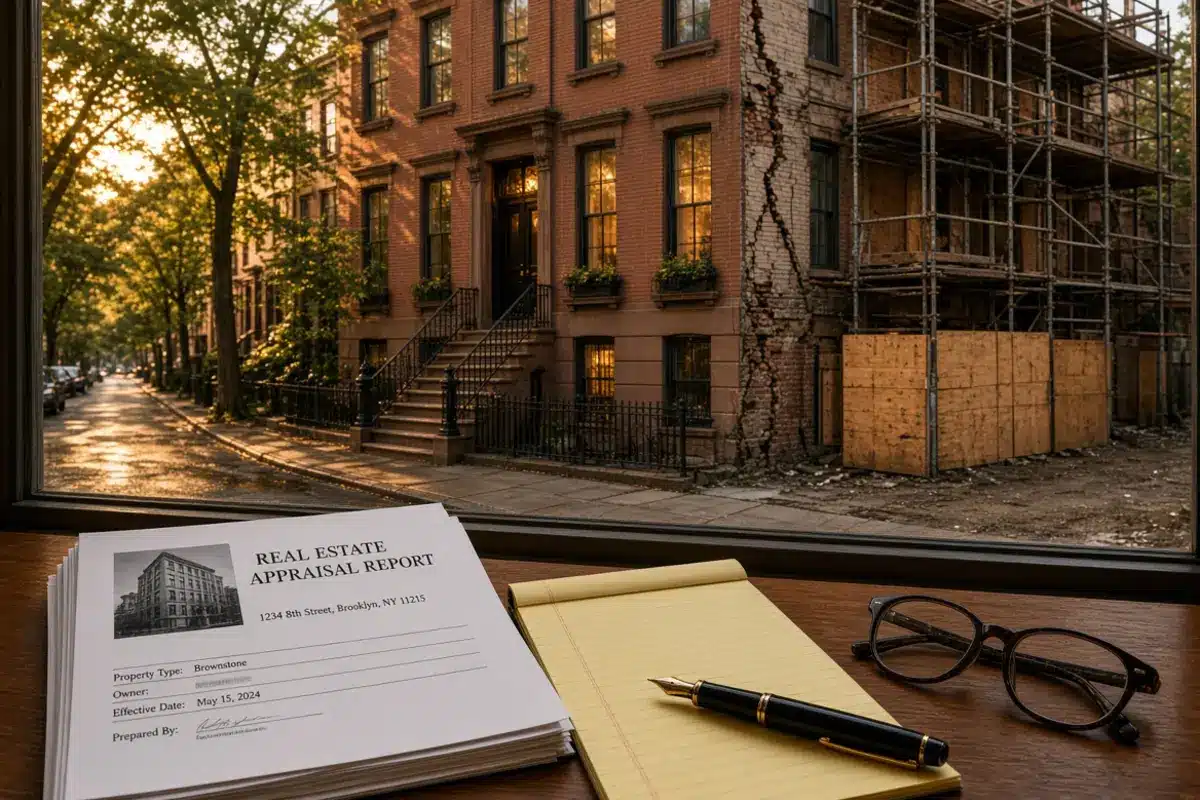
A multifamily appraisal in NYC turns mostly on one thing: the building’s income, not what similar buildings sold for. An appraiser takes your net operating income, applies a market capitalization rate, and cross-checks the result against recent apartment sales. In New York City, two local forces bend that math hard. Rent regulation caps what a large share of units can ever earn, and the Department of Finance sets its own capitalization rates for buildings with 11 or more units. Get either one wrong and the value can move by a wide margin on the very same building.
A multifamily appraisal is a licensed appraiser’s written opinion of a rental building’s market value, built mainly from its income. For a property with five or more units, the appraiser weighs net operating income, a capitalization rate, and comparable sales, then writes it up in a report that a lender, a court, or an estate filing will accept.
We appraise apartment buildings across NYC, and the same handful of issues decide whether the number holds up under a lender’s review.
What is a multifamily appraisal, and how is NYC different?
A multifamily appraisal values a rental building on the income it produces, then tests that against sales of similar buildings. NYC is different because so much of the housing stock is rent regulated, which caps income and changes how much a buyer will rationally pay.
A single-family home is valued mostly on comparable sales. An apartment building is valued mostly on money in and money out. That is why two buildings on the same block can appraise very differently: one may be full of free-market units near current rents, the other locked into rent-stabilized leases well below market. Same brick, different value. For assessment, the Department of Finance treats rental buildings with 11 or more units through the income approach, so income drives both the tax value and the market value.

How do appraisers value a multifamily building?
Most multifamily value comes from three numbers: income, operating expenses, and the capitalization rate. Change any one and the value moves.
Income starts with the rent roll. The appraiser checks actual rents against the leases, flags rent-stabilized units against free-market ones, and factors in vacancy and concessions. When rents sit below market, a market rent study can show what the units would earn if they were not capped. Operating expenses get the same scrutiny: property taxes (a heavy line in NYC), insurance, repairs, utilities, water and sewer, and management. What is left is net operating income. From there the appraiser weighs all three approaches to value an apartment building, but income leads.
Then comes the cap rate, the yield a buyer expects for that kind of building in that submarket. The arithmetic is simple, and it is unforgiving. The appraiser divides net operating income by the cap rate, so a lower rate produces a higher value and a higher rate produces a lower one. Raising the cap rate by a single point, say from 5.5% to 6.5%, cuts the value by about 15% on the exact same income, before anyone argues about the rent roll.
Comparable sales still matter, but as a cross-check. When the income value and the sales evidence point to a similar range, a lender trusts the number. When they diverge, the appraisal gets picked apart.
What moves the number
| Factor | Effect on the appraised value |
|---|---|
| Net operating income | The base of the whole valuation. Higher verified NOI lifts value directly. |
| Capitalization rate | A one-point change moves value by roughly 15% on the same income. |
| Rent-stabilized share | The larger the regulated share, the tighter the income ceiling, and often the lower the value. |
| Operating expenses | NYC taxes and rising insurance compress NOI. Under-reported expenses inflate value on paper only. |
| Condition and capital work | Documented recent improvements support higher value; deferred maintenance drags it down. |
| Location and tenancy risk | A weak submarket or unstable tenancy earns a more cautious cap rate. |
Why does NYC change the math?
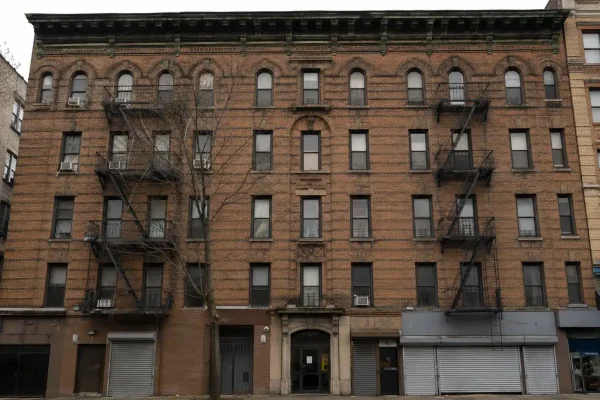
Rent regulation is the single biggest reason an NYC multifamily appraisal differs from one almost anywhere else. It caps the income a large share of units can produce, and a 2019 law made those caps much harder to escape.
A large portion of NYC apartments are rent stabilized, and owners must register those units every year with New York State’s Homes and Community Renewal agency (DHCR). The 2019 Housing Stability and Tenant Protection Act then limited most of the tools owners once used to raise regulated rents, including major capital improvement increases, individual apartment improvement increases, the vacancy bonus, and preferential rent resets. Independent research, including work from the NYU Furman Center, has linked the law to weaker sale prices for heavily stabilized buildings.
The city’s own data shows how much the operating math moves year to year. The NYC Rent Guidelines Board’s 2025 Income and Expense Study reported that net operating income across rent-stabilized buildings rose 12.1% citywide for 2023, but the spread was wide: up 23.1% in Core Manhattan versus 10.7% in Upper Manhattan. Averages hide a lot, which is why a real appraisal looks at your building, not a citywide number. We appraise apartment buildings in Manhattan and the outer boroughs, and the borough changes the number.
There is not even one NYC cap rate to point to. The Department of Finance publishes its own cap-rate ranges for rental buildings with 11 or more units, and those ranges vary by property type and location. Market cap rates that appraisers use for value are a separate set again, drawn from actual sales.
Here is what surprises owners: a bigger rent roll does not always mean a higher value. A building full of rent-stabilized tenants paying below-market rents, with no legal path to raise them, can appraise below a smaller free-market building nearby. After HSTPA, the income is effectively capped, so the extra units add cost and risk without adding much value. That runs against the instinct that more rent equals more worth, and it is exactly where NYC valuations trip up people who learned the rules in another market.
What credentials should your NYC multifamily appraiser have?
For a building with five or more units, use a New York State certified general real estate appraiser. That is the license class cleared for commercial and larger income property, and not every appraiser holds it.
Two more signals tell lenders the work will stand up. The MAI designation from the Appraisal Institute is built around income property: it requires roughly 4,500 hours of experience over at least 36 months plus a demonstration report on an income-producing building. And every credible appraisal follows USPAP, the standards set by The Appraisal Foundation. The 2024 Edition of USPAP is the current standard in 2026, and it is what a bank’s reviewer expects to see cited in the report.
This matters most when a lender is involved. For bank financing, federal Interagency Appraisal and Evaluation Guidelines require a USPAP-compliant appraisal, and both Fannie Mae and Freddie Mac require narrative multifamily appraisals that conform to USPAP. Since March 2024, Freddie Mac has told underwriters to flag appraisals that diverge sharply from recent sale prices, so a mortgage appraisal on an apartment building follows those same standards. Our commercial appraisal in NYC pages walk through how that report comes together.

How do you prepare for a multifamily appraisal?
The owners who get the strongest numbers hand the appraiser clean documentation before the inspection, not after. Verified numbers get counted. Numbers the appraiser cannot confirm usually get discounted.
Have these ready:
- A current rent roll, with rent-stabilized and free-market units clearly marked
- Two to three years of operating statements, plus your RPIE filing
- DHCR rent registration history for the regulated units
- Capital improvement records, with dates and costs
- Copies of major residential and any commercial leases
- Recent property tax bills and any tax appeal status
Clear records cut guesswork, and guesswork almost always lowers value. A little organizing up front also helps prepare before the inspection so the report does not stall waiting on paperwork.
How long does a multifamily appraisal take in NYC?
Plan on about two to three weeks for a narrative multifamily appraisal in NYC, and longer for large or mixed-use buildings. Fees scale with the size and complexity of the building rather than a flat rate, and heavily regulated or mixed-use buildings take more time because the income analysis is deeper. When timing is tight, there are ways to speed up the process without cutting corners on the analysis.
Why do multifamily appraisals come in lower than expected?
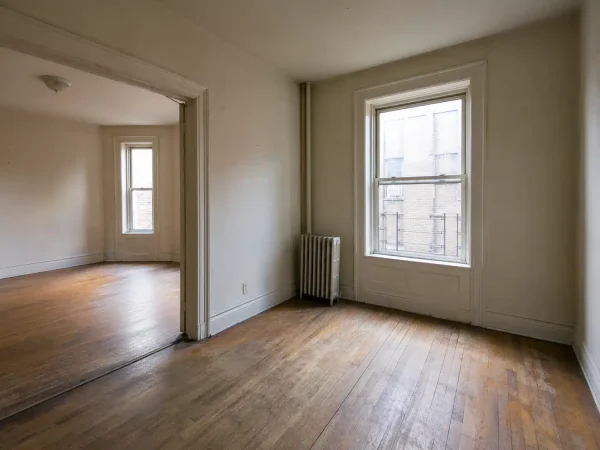
Most low multifamily appraisals in NYC come down to three things: lender conservatism, messy financials, or a building whose regulated income cannot legally rise.
Lenders weigh verified current income over optimistic projections, so an offer priced on planned rent increases can outrun what an appraiser will support. Disorganized or inconsistent operating statements get discounted because the appraiser cannot rely on numbers they cannot verify. And in NYC, a heavily rent-stabilized building can appraise below what the gross rent suggests, for the reasons above. If your number comes in under contract, the fix is usually better documentation or a challenge backed by stronger comparable evidence, not a louder argument.
What a fair multifamily appraisal actually means
A fair appraisal is not the top price a buyer might pay in a bidding war, and not the number a distressed seller would take. It is the value a typical buyer and seller would agree on with the same information, supported by income data and comparable sales. That is also why appraised value and market value can differ: the market can run hot on sentiment, while the appraisal stays anchored to documented income and verifiable sales.
The best time to think about your appraisal is about six months out. That is enough runway to get DHCR registrations correct, clean up the RPIE and operating statements, and document any capital work. By the time an appraiser walks the building, the income story is either on paper or it is not, and the multifamily appraisal number tends to follow the documentation. If you want that number reviewed before you rely on it, our NYC appraisal services put a certified general appraiser who works these buildings on your file.
FAQs
What is a multifamily appraisal in NYC?
A multifamily appraisal is a licensed appraiser’s written opinion of a rental building’s market value, based mainly on the income it produces. In NYC, buildings with 11 or more units are valued primarily by the income approach, and the Department of Finance sets its own capitalization rate ranges for them.
How is a multifamily appraisal calculated?
The appraiser divides the building’s net operating income by a market capitalization rate, then checks that figure against recent sales of similar buildings. The cap rate carries a lot of weight: raising it by a single point, for example from 5.5% to 6.5%, lowers the value by about 15% on the same income.
Why is my NYC multifamily appraisal lower than the sale price?
Lenders value verified current income, not future projections, so an offer built on planned rent increases can outrun the appraisal. Since March 2024, Freddie Mac has required underwriters to flag multifamily appraisals that diverge sharply from recent sale prices, which adds scrutiny when the two numbers are far apart.
How does rent stabilization affect a multifamily appraisal in NYC?
Rent stabilization caps what a large share of units can earn, which limits income and therefore value. The 2019 Housing Stability and Tenant Protection Act removed most paths to raise regulated rents, and the NYC Rent Guidelines Board’s 2025 study reported that net operating income across rent-stabilized buildings rose 12.1% citywide in 2023, with wide variation by borough.
Who is qualified to appraise a multifamily building in NYC?
Use a New York State certified general real estate appraiser, the license class cleared for commercial and larger income property. Many lenders also look for the MAI designation from the Appraisal Institute, and every credible appraisal follows USPAP, the standards set by The Appraisal Foundation.
How long does a multifamily appraisal take in NYC?
A narrative multifamily appraisal in NYC usually takes about two to three weeks, and longer for large or mixed-use buildings. Clean documentation up front is the single biggest way to keep it on schedule.
What documents do I need for a multifamily appraisal?
Have your current rent roll, two to three years of operating statements and your RPIE filing, DHCR rent registration history, capital improvement records, and copies of major leases ready before the inspection. Verified numbers get counted; numbers the appraiser cannot confirm usually get discounted.
[hfcm id=”154″]