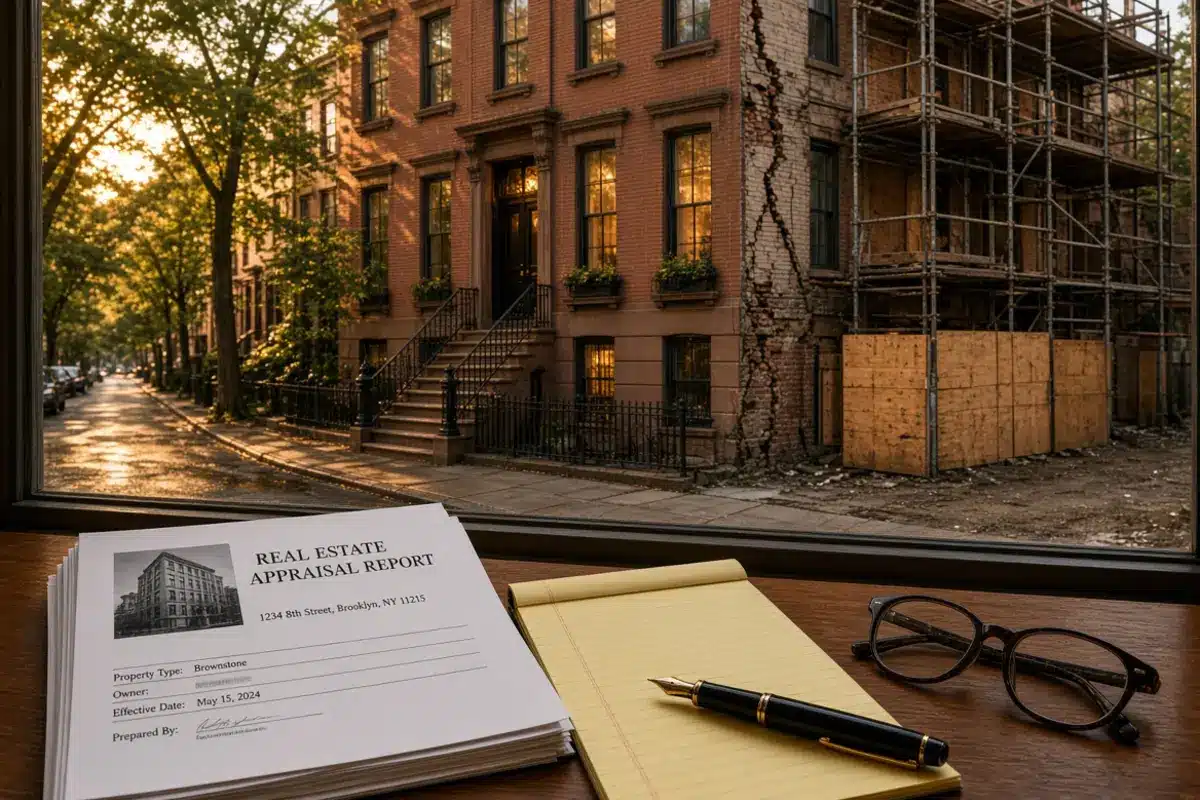
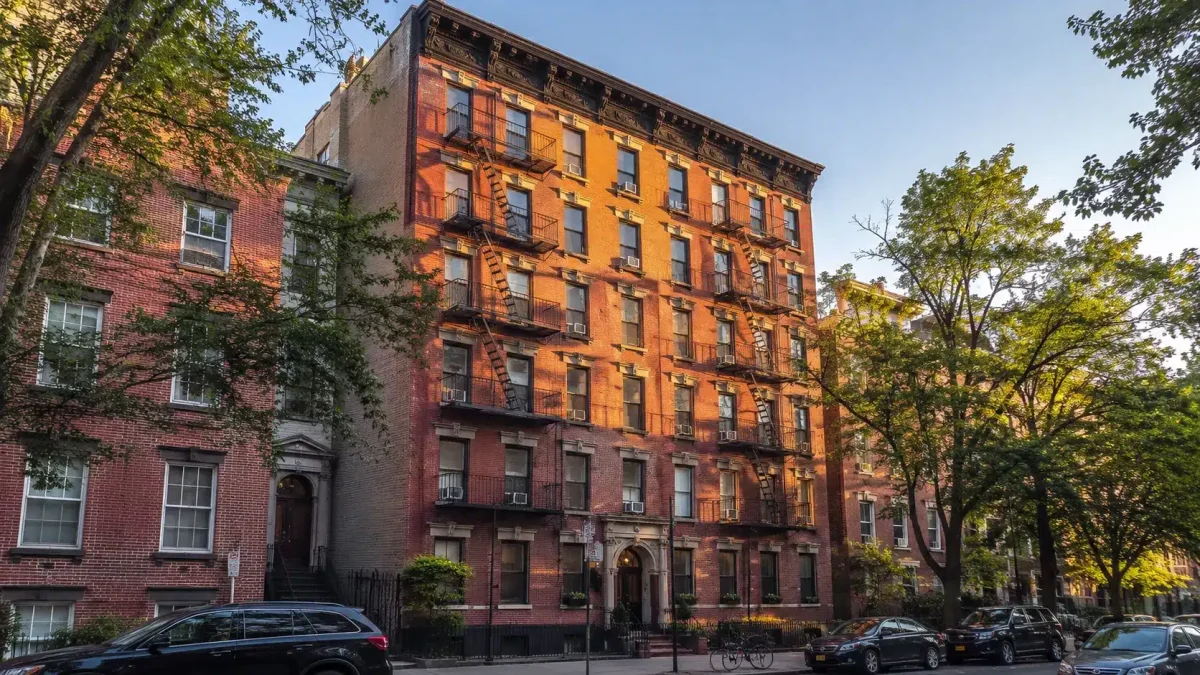
A rent controlled property appraisal is a formal opinion of a regulated building’s value, prepared by a licensed appraiser who prices the income the property can legally collect, not what it could earn at open market rents. In NYC that gap is large, and it drives the number. If you own, inherited, or are lending against a rent controlled or rent stabilized building, you’ll need this kind of appraisal for estate taxes, a divorce, a property tax challenge, a refinance, or a sale. Below is how the valuation works, why regulated buildings are worth less than they look, and when to order one. Block Appraisals has valued NYC property since 2007.
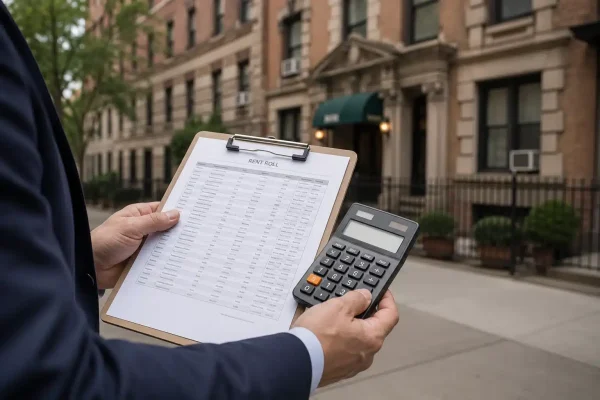
What Is a Rent Controlled Property Appraisal?
It’s an appraisal that values a rent controlled or rent stabilized building based on its regulated income stream and the rules that cap future rent growth.
A rent controlled property appraisal is a USPAP compliant report that estimates the market value of a rent regulated building in New York. The appraiser uses the rent the owner can lawfully collect today, applies the legal increase limits, and converts that income into a value using a market capitalization rate. The result reflects regulation, not open market rent.
That last point is the whole job. Two identical buildings on the same block can differ in value by a wide margin if one is rent regulated and the other is free market. An appraiser who ignores the regulation produces a number no lender, court, or assessor will accept.
Rent Control vs Rent Stabilization: What Changes in the Appraisal?
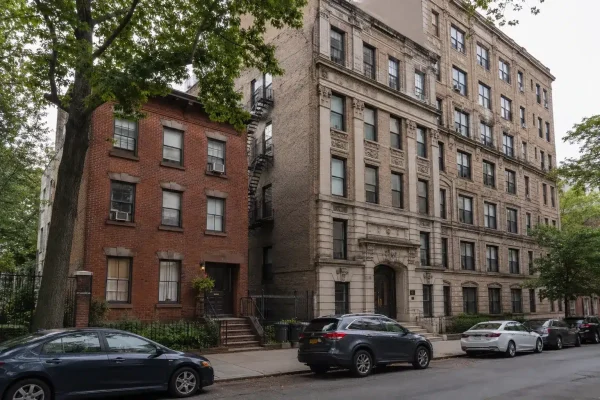
Both are rent regulation, but they’re different programs with different rules, and the appraisal has to reflect the right one. Here’s the part many owners get backwards: “rent controlled” points to the smallest slice of the market, while the buildings that actually cross an appraiser’s desk are almost always rent stabilized.
New York City has roughly 24,000 rent controlled units left, according to the 2023 NYC Housing and Vacancy Survey, versus about 960,000 rent stabilized units. Rent control is a shrinking legacy program tied to tenants who have held the same apartment since before July 1, 1971 in buildings built before February 1, 1947. Rent stabilization is the large program, covering most buildings of six or more units built before 1974.
| Feature | Rent controlled | Rent stabilized |
|---|---|---|
| Approximate NYC units (2023 HVS) | ~24,000 | ~960,000 |
| Typical building | Built before 2/1/1947, tenant in place since before 7/1/1971 | 6 or more units, built before 1/1/1974 |
| How rent rises | Maximum Base Rent, reset every 2 years; yearly increase is the lesser of 7.5% or the average of the last five Rent Guidelines Board one year increases | Annual percentage set by the NYC Rent Guidelines Board |
| Rent set by | NYS Division of Housing and Community Renewal | NYC Rent Guidelines Board |
| Effect on value | Deeply below market rents, low turnover, valued on in place income | Below market rents, valued on legal registered rents |
For valuation, the two are cousins. The same income based logic governs both: use the lawful rent, apply the statutory increase, and don’t assume upside the law won’t allow. You can confirm whether a building carries stabilized units by cross referencing the NYC Rent Guidelines Board’s rent stabilized building lists.

How Do Appraisers Value Rent Controlled Property in NYC?
The income approach leads, because a regulated building is an income machine with a legal ceiling on that income. Sales comparables and, for larger assets, a discounted cash flow support the conclusion.
Here’s the method an appraiser follows for a rent regulated building in NYC:
| Step | What the appraiser does | Why it matters |
|---|---|---|
| Start with in place income | Uses the legal registered rent on occupied units, not market rent | Tenant move outs are unpredictable, so current rent is the only defensible baseline |
| Apply the lawful increase | Models the Rent Guidelines Board increase or the rent control formula, not an assumed market jump | Overstating growth produces a number that fails lender and court review |
| Set vacancy and collection loss | Adjusts for realistic vacancy and non payment | Older regulated stock often runs higher economic vacancy |
| Normalize expenses and reserves | Strips one time costs, adds reserves for aging systems | Regulated buildings carry heavy maintenance and compliance costs |
| Capitalize the NOI | Divides the stabilized net operating income by a market cap rate | Direct capitalization is the common method for NYC multifamily |
| Test with comps and DCF | Adjusts recent regulated sales for rent roll quality and regulatory risk; runs a multi year cash flow for large portfolios | Two buildings with the same unit count can price very differently |
The number that moves value most is loss to lease, the gap between what a unit could earn at market and what it legally earns now. A wide gap looks like upside, but after 2019 that upside is slow and uncertain to capture, so a credible appraisal discounts it heavily. For a deeper look at rents specifically, owners sometimes pair the appraisal with a market rent study, which measures that gap unit by unit.
Why Are Rent Regulated Buildings Worth Less Than Market-Rate?
Because regulation caps the income while expenses keep climbing at market rates, so the same building throws off less profit and sells at a lower price. The values have moved sharply since 2019.
Sale prices for heavily rent stabilized NYC buildings have fallen well below their pre 2019 levels. As the exits to market rent closed and operating costs and mortgage rates climbed, buyers repriced these assets downward across every borough. For an appraiser, that shift is not a headline, it’s a data set. Recent regulated sales anchor the cap rate and the price per unit, and both reflect the post 2019 reality. This is also why a building’s NYC Department of Finance tax assessment often overstates today’s value. Assessments can lag the market, which is the opening for a tax challenge covered below.
How Did the 2019 HSTPA and 2024 Good Cause Law Change Value in 2026?
Two laws reshaped regulated value, and any appraisal dated in 2026 has to account for both. The 2019 law removed the old exit ramps to market rent. The 2024 law extended rent caps to many buildings that were never regulated before.
The Housing Stability and Tenant Protection Act of 2019 (HSTPA) eliminated high rent vacancy deregulation and high income deregulation. Before 2019, an owner could renovate a vacant unit, push the rent past a threshold, and remove it from stabilization. That path is gone. Stabilized units now stay stabilized, which cut off the fastest route to higher income and lowered what buyers will pay.
Good Cause Eviction took effect in New York City on April 20, 2024. It reaches many previously unregulated units in buildings built before 2009, giving covered tenants renewal rights and capping “unreasonable” rent increases at the lower of the local Consumer Price Index plus 5%, or 10% per year. Small owners with 10 or fewer units, condos, co-ops, and units above a high rent threshold are generally exempt. For appraisal, Good Cause means even a “free market” building may carry a soft ceiling on rent growth, which a careful appraiser now weighs when projecting income. You can review the current rules on the NYS Homes and Community Renewal Good Cause page.

When Do You Need a Rent Controlled Property Appraisal?
You need one whenever a lawful value on a regulated building has to hold up in front of a third party, an heir, a judge, the IRS, a lender, or an assessor. Each purpose has its own standard.
| Purpose | Why an appraisal is needed | Block service |
|---|---|---|
| Estate settlement | A date of death value for the estate tax return and for dividing assets among heirs | Estate appraisals |
| Property tax challenge (certiorari) | An independent value to argue the Department of Finance assessment is too high | Commercial appraisals |
| Divorce | A neutral value for equitable distribution of a marital property | Divorce appraisals |
| Litigation | Expert value for partnership disputes, overcharge claims, and back rent matters | Litigation appraisals |
| Refinance or purchase | Lenders underwrite regulated buildings to registered rents and conservative reserves | Mortgage appraisals |
| Pre listing or sale | A defensible asking price before you go to market | Pre listing appraisals |
The estate and tax cases carry the most money. On an estate, a well supported date of death value sets the heirs’ cost basis and can lower estate tax. On a property tax challenge, the post 2019 value decline means many regulated buildings are assessed above what they’d sell for today, and a private appraisal is the evidence that supports a reduction. If your building is a co-op, condo, or a one to four family with regulated units, a residential appraisal may be the right scope instead.

What Documents Does the Appraiser Need?
The appraisal is only as strong as the rent record behind it, so the appraiser starts with proof of what’s lawful. Gather these before the assignment begins.
The core documents are the DHCR rent registration history for every regulated unit, the current rent roll, all leases with renewal and preferential rent riders, and the building’s Rent Guidelines Board order history. For income and expenses, the appraiser needs two to three years of operating statements, the most recent real property income and expense (RPIE) filing, and the capital expenditure history, including any Major Capital Improvement or Individual Apartment Improvement filings. Add the current list of open violations and any pending overcharge or landlord tenant cases. Missing or inaccurate registrations are the single most common problem, and they can weaken the rent roll and the value.
What Affects the Cost of a Rent Controlled Property Appraisal?
The scope depends on the property, the number of units, the purpose, and how many periods the report has to cover. A single unit is faster than a 100 unit building, and a retrospective date of death value takes more work than a current one.
A rent regulated appraisal also carries more analysis than a standard one, because the appraiser has to verify registrations and model the legal rent rather than lean on market comps alone. The report is USPAP compliant and built to hold up with lenders, courts, the IRS, and the Department of Finance. For a quote on your building, contact Block Appraisals with the address, unit count, and purpose.
FAQs
What is a rent controlled property appraisal?
It’s a licensed appraiser’s opinion of a rent regulated building’s market value, based on the rent the owner can legally collect rather than open market rent. In NYC the appraiser applies the Rent Guidelines Board or rent control increase rules and capitalizes the regulated income. The regulated number is often far below what a free market building would fetch.
How is a rent controlled apartment valued differently from a market-rate one?
The appraiser uses in place, legal rent for occupied regulated units instead of market rent, and models only the increases the law allows. Market rent is applied only to vacant or lawfully deregulated units. That single change can lower value by a large margin.
Why did rent stabilized building values fall after 2019?
The 2019 rent law ended the paths that let owners raise rents to market on turnover, which removed the main source of upside. Combined with higher operating expenses and mortgage rates, that pushed sale prices for heavily stabilized buildings well below their pre 2019 levels.
Do I need an appraisal for estate or tax purposes on a rent regulated building?
Yes. Estates need a date of death value for the tax return and to divide assets, and property tax challenges need an independent value to contest the city’s assessment. Both call for a USPAP compliant report from a qualified appraiser.
What documents does a rent controlled property appraisal require?
At minimum the DHCR rent registration history, the rent roll, leases with any preferential rent riders, two to three years of operating statements, the latest RPIE filing, and records of violations or open cases. Accurate registrations are essential to a defensible value.
Rent control vs rent stabilization, which applies to my building?
Rent control generally applies to pre 1947 buildings with a tenant in place since before July 1, 1971, and only about 24,000 units remain. Rent stabilization usually applies to buildings of six or more units built before 1974, covering roughly 960,000 units. Most regulated buildings appraised in NYC are stabilized.
Disclosure: This article is for general information and is not legal, tax, or financial advice. Values, laws, and figures change. Consult a qualified professional about your specific property.
[hfcm id=”153″]