
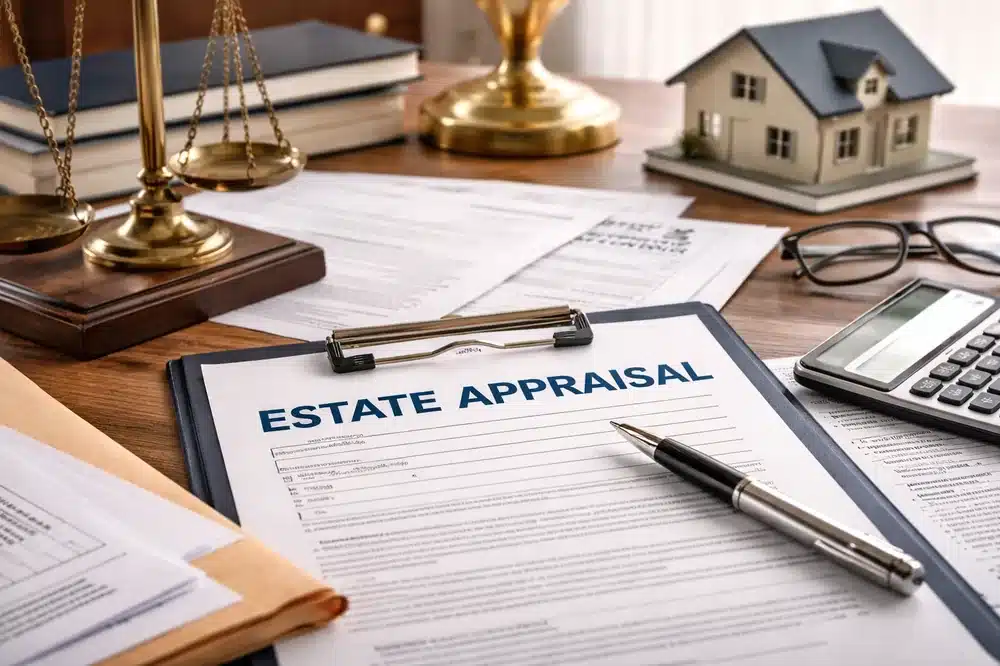
When someone passes away, an executor’s first practical task is figuring out what the estate actually owns and what it is worth. In New York City, that almost always means two very different categories of assets: real property (the co-op, condo, brownstone, or multi-family building) and personal property (furniture, art, jewelry, and household contents). Both need a defensible, professionally prepared valuation before probate can move forward.
What Is an Estate Appraisal and Why Does NYC Probate Require One?
An estate appraisal is a professional valuation of a decedent’s assets as of the date of death, prepared to support probate filings and estate tax returns. New York’s Surrogate’s Courts generally expect executors to establish fair market value for major assets as part of the estate accounting, and the IRS requires supporting documentation whenever an estate is large enough to file Form 706. Without a credible appraisal, an executor risks disputes among beneficiaries or challenges from tax authorities.
Estates in Manhattan, Brooklyn, Queens, the Bronx, and Staten Island typically include a mix of asset types, and each one carries its own valuation requirements:
- Real property: co-ops, condos, townhouses, brownstones, and multi-family or mixed-use buildings
- Household contents and furnishings, including antique and designer pieces
- Fine art, sculpture, and decorative objects
- Jewelry, watches, and precious metals
- Collectibles, memorabilia, coins, and rare books
- Vacant land or investment property held by the estate
When Does an Estate Need a Real Property Appraisal?
An estate needs a real property appraisal whenever the decedent owned a home, co-op, condo, or investment property in New York City, since these assets must be valued as of the date of death for both probate accounting and any federal or state estate tax return. This is true even if the property will eventually be sold, since the sale price months later does not substitute for a date-of-death opinion of value.
A certified residential appraiser working in NYC will typically inspect the unit or building, analyze comparable sales in the same building or neighborhood, and account for co-op transfer restrictions, building financials, or zoning issues that affect value. For commercial or mixed-use estate assets, an income approach or replacement cost analysis may also be required. These reports generally follow the Uniform Standards of Professional Appraisal Practice, the ethics and performance standard maintained by The Appraisal Foundation, which gives Surrogate’s Court and the IRS confidence in the methodology.

Do You Need an Appraisal for Personal Property in an Estate?
Generally, yes. Any estate that includes furniture, art, jewelry, or collectibles above nominal value should have those items appraised separately from the real property, because personal property valuation requires different expertise in provenance, condition, and category-specific market comparables. A real estate appraiser is not typically qualified to value a fine art collection or an antique furniture set, and vice versa.
For these assets, families and executors typically turn to specialists such as NYC personal property appraisers, who focus on fine art, furniture, jewelry, and household contents rather than real estate. Using the right specialist for each asset class is one of the most common gaps executors overlook, and it can slow down probate if the court or IRS questions who prepared the valuation and under what standard.

What Documentation Do the IRS and New York State Require for Estate Assets?
Estates that exceed the federal filing threshold, which the IRS adjusts periodically, must file Form 706, the federal estate tax return, and report the fair market value of every real and personal property asset as of the date of death. New York applies its own, separate estate tax with a lower exclusion amount, and the New York State Department of Taxation and Finance publishes the current thresholds and return requirements for estates that must file in addition to, or instead of, the federal return.
Executors preparing an estate accounting should keep in mind:
- Both the federal and New York returns require date-of-death fair market values for real property and personal property alike
- New York’s estate tax threshold is indexed and reviewed periodically, so executors should confirm the current figure rather than relying on a prior year’s amount
- Appraisers should hold recognizable credentials, such as those issued by the American Society of Appraisers or the International Society of Appraisers, depending on asset type
- Reports should follow Uniform Standards of Professional Appraisal Practice guidelines regardless of whether the asset is real estate or personal property
Real Property vs. Personal Property Appraisals: What’s the Difference?
Real property and personal property appraisals differ in the specialist required, the valuation approach used, and the credentialing body behind the appraiser, even though both ultimately support the same probate or estate tax filing. The table below summarizes the practical distinctions executors should understand.
| Factor | Real Property Appraisal | Personal Property Appraisal |
|---|---|---|
| Typical assets | Co-ops, condos, townhouses, land | Art, furniture, jewelry, collectibles |
| Specialist needed | Certified residential or commercial appraiser | ASA or ISA certified personal property appraiser |
| Valuation approach | Sales comparison, income, or cost approach | Market comparables, provenance research |
| Credentialing body | State licensing or certification board | American Society of Appraisers, International Society of Appraisers |
| Governing standard | USPAP | USPAP |
How Long Does an Estate Appraisal Take?
Most real property estate appraisals in NYC are completed within one to two weeks of the initial inspection, while personal property appraisals often take a similar timeframe once photos, descriptions, and any provenance documentation have been provided. Complex estates with multiple properties, extensive art collections, or contested valuations can take longer, particularly if additional research into comparable sales or provenance is required.
Executors should plan for these timelines early in the probate process rather than waiting until a filing deadline is close. Coordinating a real estate appraisal and a personal property appraisal at the same time, rather than sequentially, often shortens the overall path to a completed estate accounting.
Choosing the Right Appraiser for an NYC Estate
Executors settling an estate in New York City should confirm credentials and experience before hiring an appraiser for either asset category:
- Ask whether the appraiser has direct experience with the specific asset type, whether that is a Manhattan co-op or a mid-century furniture collection
- Confirm the report will be USPAP-compliant and suitable for Surrogate’s Court and IRS review
- Verify professional affiliations, such as membership with a recognized personal property appraisal society or state licensing board
- Request a sample report or summary of the appraiser’s typical turnaround time
A properly documented estate, covering both the real property and the personal property inside it, gives executors a clean record for probate, reduces the risk of disputes among heirs, and satisfies the documentation the IRS and New York State expect on an estate tax return.nd knowledge of the local borough market. Co-op board nuances and neighborhood-specific pricing require someone familiar with that particular borough, not a general residential appraiser.
FAQs
What is an estate appraisal and why does NYC probate require one?
An estate appraisal is a professional valuation of a decedent’s assets as of the date of death, prepared to support probate filings and estate tax returns. New York’s Surrogate’s Courts generally expect executors to establish fair market value for major assets, and the IRS requires supporting documentation whenever an estate is large enough to file Form 706.
Does an estate need a real property appraisal even if the property will be sold later?
Yes. Real property must be valued as of the date of death for probate accounting and any federal or state estate tax return, even if the property will eventually be sold. A sale price months later does not substitute for a date-of-death opinion of value.
Do I need a separate appraisal for personal property in an estate?
Generally, yes. Furniture, art, jewelry, and collectibles above nominal value should be appraised separately from real property, since personal property valuation requires different expertise in provenance, condition, and category-specific market comparables. A real estate appraiser is not typically qualified to value a fine art collection, and vice versa.
What’s the difference between a real property appraisal and a personal property appraisal?
They differ in the specialist required, the valuation approach used, and the credentialing body behind the appraiser. Real property appraisals rely on a certified residential or commercial appraiser using sales comparison, income, or cost approaches, governed by state licensing and USPAP. Personal property appraisals rely on an ASA or ISA certified appraiser using market comparables and provenance research, also governed by USPAP.
What documentation do the IRS and New York State require for estate assets?
Estates that exceed the federal filing threshold must file Form 706 and report the fair market value of every real and personal property asset as of the date of death. New York applies its own separate estate tax with a lower exclusion amount, so executors should confirm current thresholds with the New York State Department of Taxation and Finance rather than relying on a prior year’s figure.
How long does an estate appraisal take in NYC?
Most real property estate appraisals are completed within one to two weeks of the initial inspection, and personal property appraisals often take a similar timeframe once photos, descriptions, and any provenance documentation are provided. Complex estates with multiple properties or extensive art collections can take longer.
Should I coordinate the real property and personal property appraisals at the same time?
Yes. Coordinating both at once, rather than sequentially, often shortens the overall path to a completed estate accounting compared to handling them one after the other.
How do I choose the right appraiser for an NYC estate?
Confirm the appraiser has direct experience with the specific asset type, whether that’s a Manhattan co-op or a furniture collection, that the report will be USPAP-compliant and suitable for Surrogate’s Court and IRS review, and that they hold appropriate professional affiliations or state licensing for that asset category.
[hfcm id=”154″]