
Independent land valuation services for vacant lots, development sites, underutilized properties, and air rights across New York City.
Licensed since 2007 • USPAP-compliant reports • 20+ years of NYC market experience


Many people associate real estate appraisals with properties that contain existing improvements, such as residential or commercial buildings. In many cases, though, the existing improvements may not represent the most productive use of the land.
In New York City, a property’s zoning, Floor Area Ratio (FAR), development rights, air rights, location, access, and site conditions all require careful analysis by an experienced property appraiser. A vacant land appraisal in NYC needs to look beyond the lot itself and evaluate what the market, zoning rules, and physical site conditions support.
From small vacant parcels to larger development sites, lots with older structures, and properties with remaining air rights, Block Appraisals provides an unbiased look into the current or retrospective value of land throughout the five boroughs.
Most importantly, not all vacant properties are created equal. We review the details that may affect market value, including existing improvements, remaining air rights, environmental factors, access, utilities, physical conditions, and development potential.
Vacant land valuation requires specialized expertise beyond a typical property appraisal. With land, the value is often tied to what can legally and financially be built, not just what exists on the site today.
A qualified NYC vacant land appraiser must consider zoning constraints, development potential, market demand, construction costs, permitting timelines, comparable land sales, and the time value of money. In New York City’s highly regulated real estate market, understanding what can be built—and what the market will support—is essential to an accurate land valuation.
A vacant lot may appear simple at first glance, but the value can shift significantly based on allowable use, buildable square footage, lot shape, air rights, neighborhood demand, utility access, environmental concerns, and potential redevelopment options.
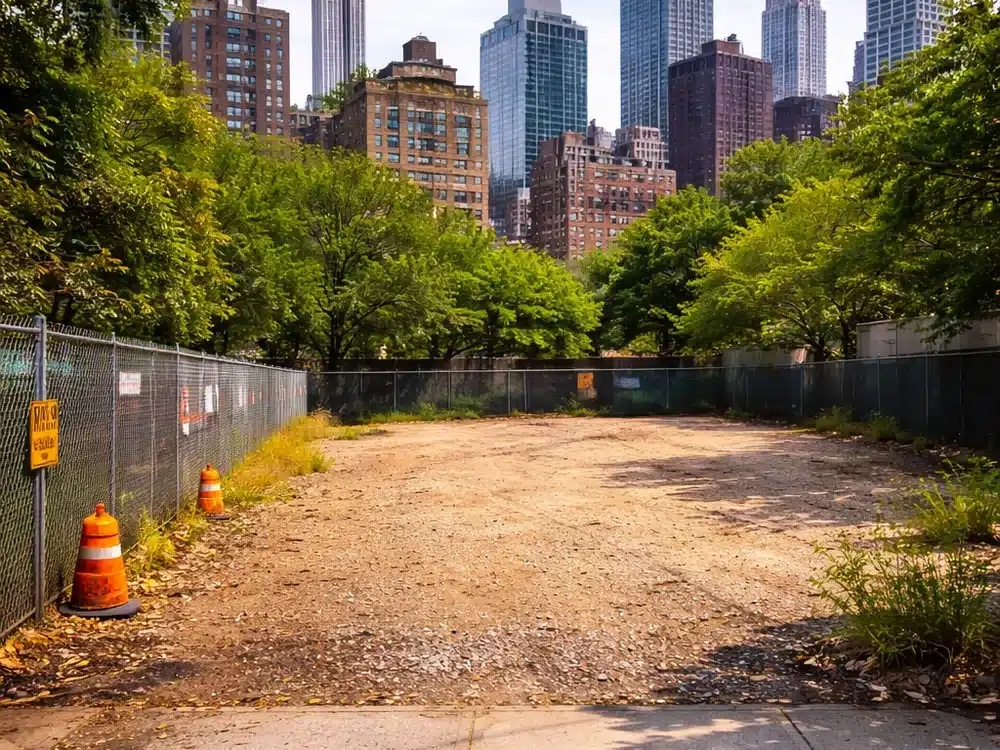
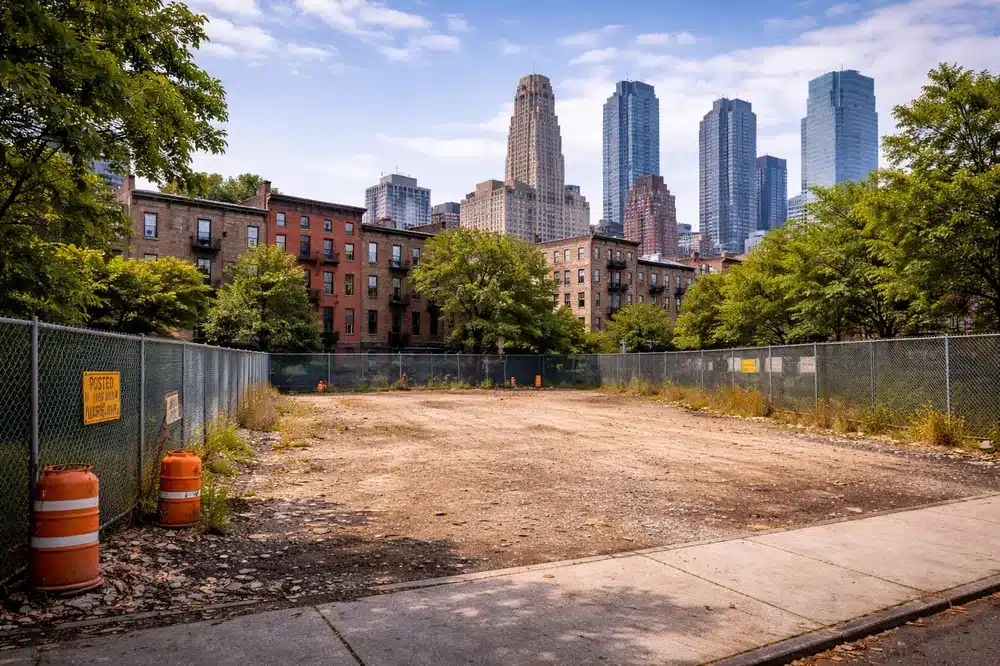
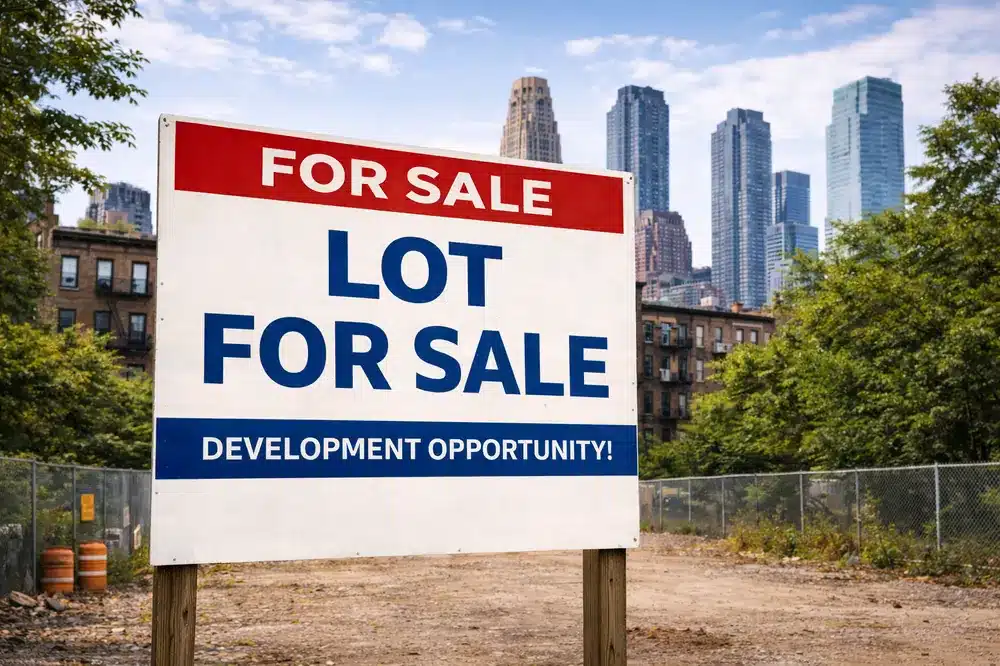

If you own a property or piece of land you’re ready to sell, a professional appraisal can help support your pricing strategy. With an in-depth evaluation, you can prepare a stronger property listing with clear details about development potential, zoning parameters, and a supportable list price designed to attract serious buyers.
Our analysis identifies the highest and best use that may support your land’s market appeal and value.
New York City offers many opportunities for residential, commercial, and mixed-use development. A vacant land appraisal helps buyers, investors, and developers understand whether the purchase price aligns with the site’s development potential and market conditions.
We provide an unbiased report that analyzes zoning constraints, comparable land sales, development feasibility, and other key factors so you can review an acquisition with clearer valuation support.
Lenders often require land appraisals to determine loan-to-value ratios for acquisition financing, construction loans, and development projects. A well-supported appraisal gives lenders a clearer view of the property’s market value and the assumptions behind the valuation.
Vacant land valuations may be needed for estate planning, date-of-death valuation, step-up basis, cost basis, gift tax, charitable donations, and other tax-related matters. A USPAP-compliant appraisal can help document value for attorneys, accountants, executors, and family members.
If a vacant lot or development site appears over-assessed, a professional appraisal can provide evidence of current market value and relevant development constraints. This may support a property tax appeal or assessment review.
When partners, family members, or ownership groups disagree about land value, a neutral third-party appraisal can help support an equitable settlement. This is especially important when the site has redevelopment potential or remaining air rights.
Property owners facing a government taking need a clear valuation that considers market value, location, highest and best use, and development potential. A land appraisal can help document the property’s value in condemnation-related matters.
Tax-deferred exchange transactions may require qualified appraisals to establish land value for reporting and documentation. A professional vacant land appraisal can support the transaction file and help clarify the value of the exchanged asset.
Block Appraisals provides land valuation services for a wide range of vacant and underutilized properties throughout New York City. Each assignment is reviewed based on the property’s specific borough, neighborhood, zoning, physical characteristics, and intended use of the appraisal.

Valuing vacant land in New York City involves multiple interrelated factors. A change in one factor can affect the property’s development potential, marketability, and value conclusion.
NYC’s zoning code determines what can be built on a property. Zoning may affect permitted uses, maximum FAR, height limits, setbacks, lot coverage, parking rules, special district requirements, and other development standards.
These zoning parameters directly influence land value because they help determine the site’s legally allowable development potential.
Unused development potential, often referred to as air rights, can add significant value. In some cases, these rights may be retained for future development. In other cases, they may be sold or transferred to another site, depending on applicable rules and restrictions.
Understanding transferable development rights is especially important in New York City, where buildable square footage can be a major driver of land value.
Lot size, shape, topography, street frontage, corner exposure, access, and surrounding uses all affect development feasibility. In densely built NYC neighborhoods, even small site advantages or limitations can influence market value.
Access to water, sewer, electric, gas, and telecommunications infrastructure can affect development costs. Properties that require new connections, upgrades, or infrastructure work may have different development economics than sites with stronger existing utility access.
Soil conditions, contamination history, wetlands, flood zones, and environmental remediation requirements can affect whether a site can be developed cost-effectively. These issues may reduce feasibility, increase risk, or require additional professional reports.
The pace at which a completed project can be sold or leased matters. Strong demand for the proposed use may support higher land value, while slower absorption or uncertain demand may reduce feasibility.
A vacant land appraisal must consider the use that is legally permissible, physically possible, financially feasible, and maximally productive. In NYC, highest and best use analysis often requires a close review of zoning, market activity, development costs, and buyer demand.



Appraising vacant land in New York City presents challenges that do not exist in many other markets.
NYC includes many zoning districts, overlays, and special rules. Contextual zoning, special districts, inclusionary housing rules, mandatory affordable housing requirements, transit-related designations, and regulatory changes may all affect development potential.
Construction costs, labor costs, financing conditions, permitting timelines, building code requirements, and professional fees can all affect what a developer may be willing to pay for land.
Land values may vary greatly between boroughs, neighborhoods, corridors, and even individual blocks. A development site in Manhattan may require a very different analysis than a residential lot in Staten Island or a mixed-use parcel in Queens.
Properties in historic districts or near landmarked buildings may face development limits, design review, or additional approval requirements. These issues can affect both feasibility and value.
Some development plans may require review by agencies, community boards, or other approval bodies. Longer timelines and uncertain approvals can affect what a buyer is willing to pay for a site.
Your comprehensive vacant land appraisal may include the following, depending on the scope of the assignment:
Detailed documentation of lot size, dimensions, topography, frontage, access, utilities, location, and physical characteristics when applicable.
A zoning analysis review of zoning district regulations, permitted uses, FAR, development restrictions, and relevant special requirements.
The Highest and Best Use Determination is an analysis of legally permissible, physically possible, financially feasible, and maximally productive uses for the land.
An overview of real estate trends, development activity, and market conditions in the subject property’s market area.
Detailed analysis of appropriate land transactions, including vacant parcels and improved properties purchased for land value, with adjustments for differences in location, size, zoning, utility access, and development potential.
When applicable, the report may include a preliminary analysis of development potential and economic feasibility based on available information. Because development potential is such an important part of vacant land value in NYC, we may also draw on Block Appraisals’ professional network, including experienced architects and other development-related professionals, to better understand what may be possible on a specific lot.
This added perspective can help provide more detail around buildable potential, site limitations, and practical development considerations, which supports a more accurate and useful valuation.
Visual documentation of the site, surrounding area, street context, location maps, and other relevant property details.
Review of zoning maps, tax maps, surveys, title information, site plans, feasibility studies, environmental reports, or other documents that are available or provided for the assignment.
A clear, supportable opinion of value prepared in a USPAP-compliant written report.
We use a straightforward process to keep the assignment clear from the start.
We discuss your property’s location, size, zoning, intended use of the appraisal, and timeline. Understanding your objective helps ensure the report addresses your specific needs.
After confirming the scope of work, we provide an engagement agreement and request any available property documents. Helpful documents may include a survey, tax lot information, zoning materials, title details, environmental reports, architectural plans, or development studies.
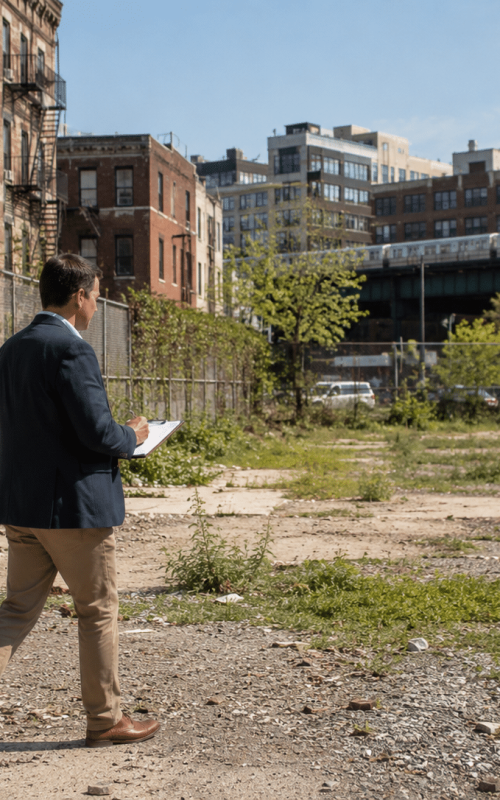
Our appraiser conducts a detailed site inspection, photographs the property, reviews zoning information, researches comparable sales, and collects relevant market data.
We analyze legally permissible uses, physical possibilities, financial feasibility, and maximum productivity to determine the use that supports the highest land value.
We apply the appropriate valuation methods, reconcile the findings, and prepare a comprehensive appraisal report that meets USPAP standards and the needs of the assignment.
Vacant land appraisals are delivered based on the complexity of the property and the research required. Rush service may be available when timing is a concern.


Professional vacant land appraisals use valuation methods appropriate to the property’s characteristics, available data, and intended use of the report.
The sales comparison approach is the primary method for many vacant land appraisals. We analyze recent sales of comparable parcels, including vacant lots and improved properties purchased with the intention of demolishing existing structures. This is common in NYC, where truly vacant land may be limited.
Adjustments may be made for location, lot size, existing improvements, zoning, utilities, access, development rights, market conditions, and development potential.
For larger parcels with subdivision potential, we may analyze the value of finished lots after accounting for development costs, time, and developer profit. This method may be relevant for certain outer-borough properties with residential development potential.
When improved sales are more common than vacant land sales, we may estimate land value by extracting it from total property value. This involves analyzing improved sales and deducting the contributory value of the improvements.
For development sites, the land residual technique estimates land value by calculating the value of the completed development and subtracting construction costs, professional fees, financing costs, developer profit, and the time value of money.
When there are limited vacant land sales available, we may use the allocation method to help estimate land value. This approach looks at sales of improved properties and analyzes the typical portion of total property value attributed to the land. That land-to-value relationship can then be applied to the subject property when supported by reliable market data.
The allocation method is often most useful for residential lots in established neighborhoods, where there are enough improved sales to identify a reasonable relationship between land value and overall property value.
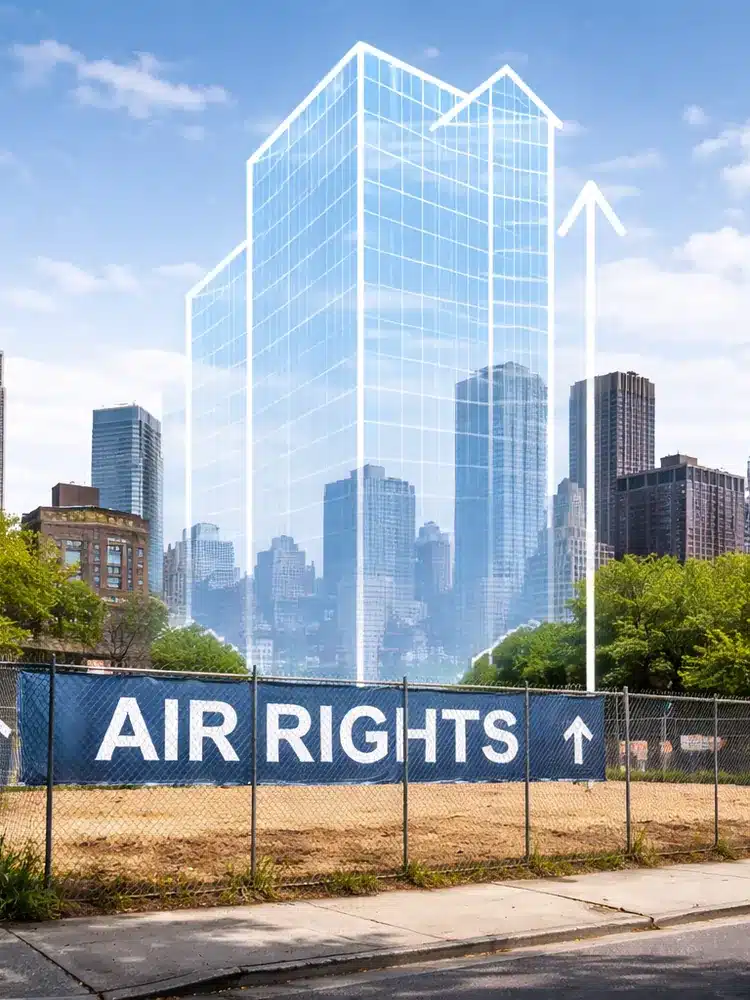
Many NYC properties, especially older low-rise buildings or underbuilt sites, may have unused development rights that add value.
Understanding Air Rights: Air rights generally refer to the difference between what is currently built and what zoning may allow. These unused rights may support future development, expansion, or possible transfer depending on applicable zoning rules.
Transfer Mechanisms: In certain zoning districts and landmark areas, development rights may be transferred to adjacent or nearby properties. This can create value even when the current owner does not plan to redevelop the site.
Valuation Considerations: Air rights values depend on receiver-site demand, zoning regulations, transfer restrictions, location, market conditions, and development feasibility. Professional analysis is essential to determine their contributory value.

If you own a property or piece of land you're ready to sell, we're here to help. With our in-depth evaluation, you can create a compelling property listing with granular details about development potential, zoning parameters, and an accurate list price designed to attract serious buyers. Our analysis identifies the highest and best use that maximizes your land's market appeal and value.

New York City is ripe with growth opportunities for residential and commercial developers, and a vacant land evaluation helps you identify the perfect location for your next investment. We provide an unbiased, transparent report analyzing development potential, zoning constraints, comparable land sales, and market feasibility so you can make confident acquisition decisions aligned with your development goals and risk tolerance.
Vacant land valuation in New York City requires local market knowledge. Each borough has different property types, buyer pools, zoning patterns, and development pressures.
Providing available documents at the beginning of the assignment can help support a more complete analysis. Not every property owner will have all of these documents. We can discuss what is available during the initial consultation.
A vacant land appraisal is not a boundary survey, engineering report, architectural feasibility study, environmental assessment, title opinion, or legal zoning determination.
When those services or documents are needed, we can review available third-party reports as part of the appraisal assignment. The appraisal itself provides an independent opinion of value based on the agreed scope of work, available data, market evidence, and professional appraisal standards.
A vacant land appraisal in NYC is an independent opinion of value for a vacant lot, development site, or underutilized property. The appraisal may consider zoning, FAR, development rights, air rights, comparable land sales, site conditions, market demand, and highest and best use.
A vacant land appraiser reviews the property’s location, zoning, size, access, utilities, development potential, market conditions, comparable sales, and any constraints that may affect use or value. Depending on the property, the appraiser may use the sales comparison approach, land residual technique, extraction method, allocation method, or other appropriate valuation methods.
Yes, in NYC, some properties with existing structures are purchased primarily for land value or redevelopment potential. In those cases, the appraisal may consider whether the existing improvements contribute to value or whether the land’s highest and best use supports redevelopment.
Air rights can have a major impact on value when unused development rights exist, and there is market demand for additional buildable square footage. The value of air rights depends on zoning, transfer rules, receiver-site demand, market conditions, and development feasibility.
Yes. Vacant land appraisals may be used for estate planning, date-of-death valuation, step-up basis, cost basis, gift tax, charitable donations, and other tax-related matters. Attorneys, accountants, executors, and property owners often use appraisal reports to document value.
Yes, if a vacant lot or development site appears over-assessed, an appraisal may help support a tax appeal by documenting market value, site limitations, zoning restrictions, and other relevant valuation factors.
Timing depends on the property’s complexity, the intended use of the report, available documents, and the amount of research required. Development sites, air rights assignments, and properties with unusual zoning or environmental issues may require more time than simpler vacant lots.
Helpful documents may include a survey, site plan, tax lot information, zoning documents, title report, environmental reports, architectural plans, feasibility studies, prior appraisals, purchase contract, listing details, or development pro forma.
Yes. Block Appraisals provides vacant land appraisal services across Manhattan, Brooklyn, Queens, the Bronx, and Staten Island.

Whether you’re selling, buying, financing, appealing taxes, settling an estate, evaluating air rights, or reviewing development potential, Block Appraisals provides clear and defensible land valuations built around New York City’s complex real estate market.
Contact us today to schedule your NYC vacant land appraisal.
No cookies in this category.
No cookies in this category.