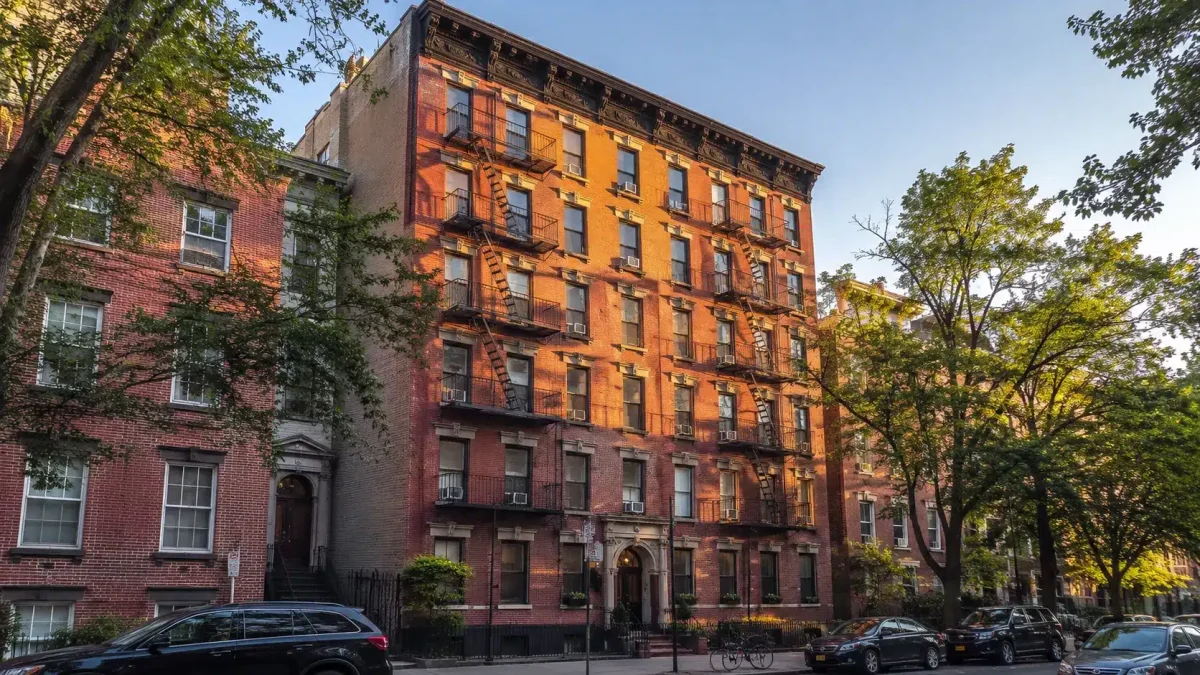

New York City’s “City of Yes for Housing Opportunity” went into effect in December 2024, and it’s already changing how properties get valued across all five boroughs. The reform rewrites decades of zoning rules to allow roughly 82,000 new homes over 15 years (NYC Department of City Planning, 2024). But the bigger story for property owners isn’t the housing supply. It’s how your lot’s development potential just shifted, and whether your current appraisal reflects that.
City of Yes is a citywide zoning reform that legalizes accessory dwelling units, reduces parking mandates near transit, and allows higher density residential construction in previously restricted areas. It affects property appraisals by expanding what can legally be built on a given site, which directly changes highest-and-best-use analysis.

What Is City of Yes for Housing Opportunity?
City of Yes is NYC’s answer to a housing shortage that has been building for decades. The City Council approved it on December 5, 2024, after months of public review. It’s the largest zoning analysis during an appraisal overhaul the city has seen in generations.
I’ll be direct about what this does: it removes restrictions that blocked housing construction in lower-density neighborhoods for decades. If you own a single-family home in an R1 through R5 zone, your property’s buildable envelope just expanded. If you own a lot near a subway station, the allowable density may have jumped by 20% or more through the Universal Affordability Preference (UAP) bonus.
That shift is already showing up in the data. NYC permitted roughly 17,600 new homes in the first 10 months of 2025 – 22.8% more than the same stretch in 2024 (NYC Mayor’s Office, December 2025). Meanwhile, over 100 developments filed for the UAP density bonus, aiming at roughly 5,400 new units.
What Are the Major Zoning Changes Under City of Yes?
Five changes matter most for property owners, and each one hits differently depending on your location and property type.
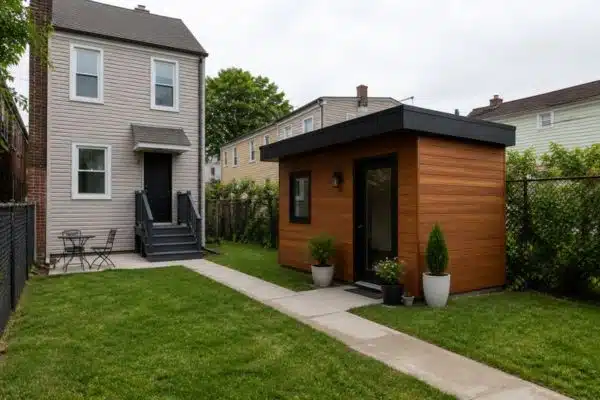
- Accessory Dwelling Units (ADUs). Homeowners in most low-density zones can now add a basement apartment, backyard cottage, or garage conversion up to 800 square feet. The city had 98 ADU filings by late 2025, concentrated in Brooklyn, Queens, the Bronx, and Staten Island (NYC DOB data). The Regional Plan Association estimates roughly 142,000 single-family parcels across the city are suitable for conversions. That’s untapped development potential that appraisers now need to account for.
- Reduced Parking Requirements. New residential projects near transit corridors no longer need as much off-street parking. Less parking means more buildable area, which makes more projects pencil out financially.
- Transit-Oriented Development. Areas near subway and commuter rail stations can now support 3 to 5 story buildings where only 1 to 2 family homes were allowed. This is where the biggest appraisal shifts will happen, because market trends shape appraisals around transit access more than almost any other factor in NYC.
- Town Center Zoning. Commercial corridors in lower-density neighborhoods can now include residential units above retail.
- Shared Housing. Single-room occupancy and other shared models are legal again across most of the five boroughs.
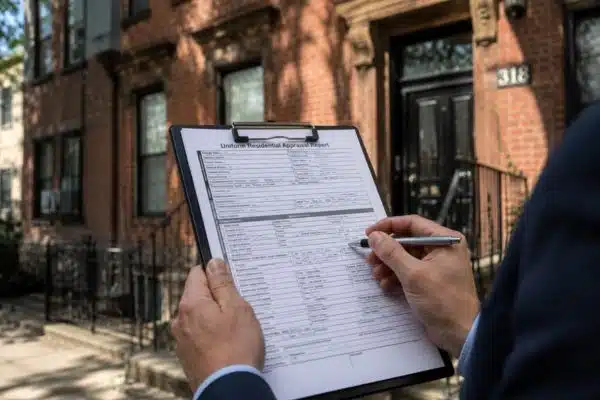
How Does City of Yes Affect NYC Property Appraisals?
Here’s the contrarian take most articles won’t give you: City of Yes doesn’t automatically raise your property value. It changes your property’s development potential, and those are two different things.
For a single-family homeowner who can now legally add an ADU, the value increase depends on whether the rental income that unit generates actually pencils out after construction and permitting. If the rental income justifies the build, an appraiser should reflect that added income potential. If it doesn’t, the ADU right is theoretical upside, not concrete.
For lot owners in transit corridors, expanded FAR (floor area ratio) can increase land value significantly. The new R11 and R12 zoning districts mapped in the Midtown South plan allow up to 15 to 18 FAR with mandatory inclusionary housing, compared to roughly 10 to 12 before (NYC Council, August 2025). That’s a real change in what a developer would pay for your site.
The gap between appraised value and market value has widened in neighborhoods where these changes apply. Appraisals that still rely on pre-2024 comparable sales without adjusting for new zoning rights are likely leaving value on the table.
What Should Brooklyn and Manhattan Property Owners Do Now?
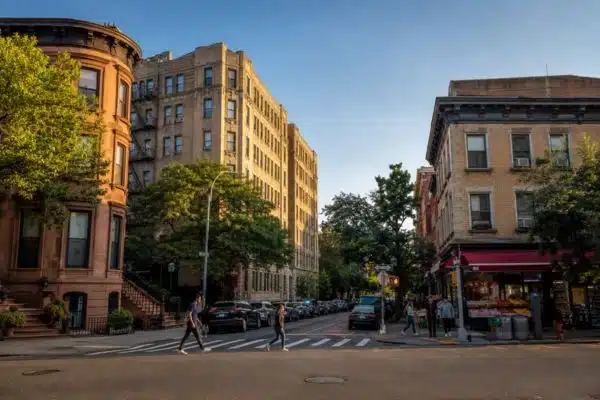
Brooklyn owners in Crown Heights, Bed-Stuy, and Bushwick have the most to gain. These neighborhoods combine exactly what the new rules reward: low-density zoning that just got loosened, strong transit access, and rising demand. That’s why the ADU and transit-oriented development provisions land hardest here.
Manhattan owners near transit hubs and in areas mapped for higher-density R11/R12 districts, Midtown South in particular – should expect increased developer interest. That pressure is already quantifiable: the office conversion pipeline alone has over 12,000 homes in various stages, with more than 3,000 designated as affordable (NYC Comptroller data, 2025).
If you’re going through an estate settlement, tax appeal, refinancing, or pre-listing process, your appraisal needs to reflect current zoning. I’ve seen properties undervalued by tens of thousands because the appraiser used pre-reform comps without adjusting for new as-of-right development potential. The question most owners never ask: “What is my property’s maximum buildable potential under the new UAP and R-district mapping?”
Getting a zoning-aware appraisal before City of Yes fully plays out gives you a baseline that protects your interests whether you’re buying, selling, or holding.
Frequently Asked Questions
How does City of Yes affect my property’s appraisal value in NYC?
City of Yes changes your property’s development potential by legalizing ADUs, increasing allowable density near transit, and expanding buildable floor area through the UAP bonus. Appraisers must now factor in these new as-of-right opportunities when performing highest-and-best-use analysis. Properties in rezoned areas may see value increases tied to added rental income potential or expanded FAR.
Can I add an ADU to my single-family home under City of Yes?
Yes, in most R1 through R5 zones. The rules allow basement apartments, backyard cottages, and garage conversions up to 800 square feet. Historic districts and flood zones have restrictions. By late 2025, the NYC Department of Buildings had received 98 ADU filings, mostly in Brooklyn, Queens, the Bronx, and Staten Island.
What is the Universal Affordability Preference and how does it work?
The UAP gives developers a 20% or greater density bonus citywide if they include affordable units at roughly 60% of area median income. Over 100 developments applied for the UAP in its first year, targeting about 5,400 new homes with approximately 900 affordable units. It applies across medium and high-density zones.
Will City of Yes lower housing prices in NYC?
Not quickly. NYC permitted 22.8% more new homes in 2025 compared to 2024, but the full impact of the reform spans 15 years. The Harvard Joint Center for Housing Studies’ 2025 report shows national home prices at record highs relative to incomes, and NYC’s affordability challenges remain severe. Supply increases take time to affect pricing.
How do office conversions under City of Yes affect property values?
Over 12,000 homes are in the office conversion pipeline across NYC, with more than 3,000 designated as affordable. City of Yes, combined with the 467-M tax incentive, streamlined conversions for pre-1991 buildings. Owners of commercial properties in conversion-eligible areas may see land values shift as residential demand increases.
What neighborhoods benefit most from City of Yes zoning changes?
Transit-adjacent outer borough neighborhoods gain the most from ADU legalization and transit-oriented development rules. Brooklyn neighborhoods like Crown Heights, Bed-Stuy, and Bushwick are in the sweet spot. Manhattan areas mapped for higher-density R11 and R12 districts, particularly Midtown South, benefit from expanded FAR and conversion opportunities.
Does adding an ADU change my property tax assessment?
Potentially. Adding a legal dwelling unit increases your property’s documented income potential, which can trigger reassessment. The tax impact varies by property class and borough. Owners should consult their local assessor’s office and get a current appraisal before and after an ADU project to understand the full financial picture.
[hfcm id=”148″]