Many people associate real estate appraisals with properties that contain existing improvements such as residential or commercial buildings, but in fact, these improvements may not represent the most productive use of the land. The property’s zoning, Floor Area Ratio (FAR), development rights, and unique characteristics all require careful analysis by an experienced property appraiser. From small vacant parcels to expansive lots with existing structures and remaining air rights, our team offers an unbiased look into the current or retrospective value of any piece of land in the five boroughs.
Most importantly, we know that not all vacant properties are created equal. That’s why we take the time to evaluate all data relating to your property, assessing existing improvements, remaining air rights, environmental factors, access, utilities, and any other on-site conditions that could impact development potential.
Vacant land valuation requires specialized expertise beyond typical property appraisal. Without existing structures to provide comparable sales data, appraisers must analyze development potential, zoning constraints, market absorption, construction costs, and the time value of money. In NYC’s complex regulatory environment, understanding what can legally be built—and what the market will support—is essential to accurate land valuation.
Valuing vacant land in New York City involves analyzing multiple interrelated factors:
NYC's intricate zoning code determines what can be built, including permitted uses, maximum FAR, height restrictions, setback requirements, and special district regulations. These zoning parameters directly drive land value.
Unused development potential (air rights) can significantly impact value, whether retained for future development or sold/transferred to adjacent properties. Understanding TDR regulations is critical for accurate valuation.
Lot size, shape, topography, street frontage, corner locations, and access all affect development feasibility and construction costs. In densely built NYC, even small site advantages can substantially impact value.
Access to water, sewer, electric, gas, and telecommunications infrastructure affects development costs. Properties requiring new utility connections or service upgrades face reduced development economics.
Soil conditions, contamination history, wetlands, flood zones, and environmental remediation requirements can dramatically impact development feasibility and costs, directly affecting land value.
The pace at which completed development can be sold or leased in the current market influences land value. Strong demand supports higher land prices; weak absorption reduces development feasibility.

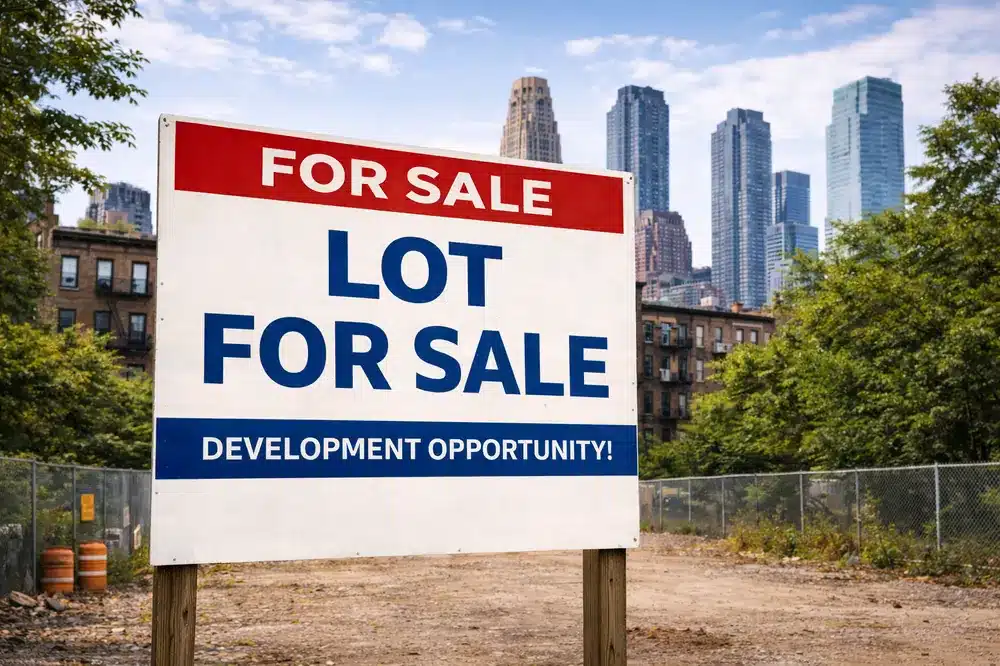
If you own a property or piece of land you're ready to sell, we're here to help. With our in-depth evaluation, you can create a compelling property listing with granular details about development potential, zoning parameters, and an accurate list price designed to attract serious buyers. Our analysis identifies the highest and best use that maximizes your land's market appeal and value.

New York City is ripe with growth opportunities for residential and commercial developers, and a vacant land evaluation helps you identify the perfect location for your next investment. We provide an unbiased, transparent report analyzing development potential, zoning constraints, comparable land sales, and market feasibility so you can make confident acquisition decisions aligned with your development goals and risk tolerance.
Acquisition Analysis: Developers and investors require accurate land valuations before making purchase decisions. Our analysis includes development feasibility to support investment underwriting.
Financing & Development Loans: Lenders require land appraisals to determine loan-to-value ratios for acquisition financing, construction loans, and development projects.
Estate Planning & Tax Purposes: Vacant land valuations support estate planning strategies, establish basis for tax reporting, and satisfy IRS requirements for gift and estate tax returns.
Property Tax Appeals: Challenging assessed values on vacant land requires professional appraisal evidence demonstrating current market value and development constraints.
Partnership Buyouts & Disputes: Neutral third-party valuations facilitate equitable settlements when partners disagree on land value or development strategy.
Eminent Domain & Condemnation: Property owners facing government taking require expert appraisals demonstrating fair market value and development potential.
1031 Exchange Transactions: Tax-deferred exchanges require qualified appraisals establishing land values for IRS reporting and documentation.
Professional vacant land appraisals employ methodologies appropriate to the property’s characteristics:
The primary method for most vacant land. We analyze recent sales of comparable parcels, including both vacant lots and improved properties purchased with the intention of demolishing existing structures—which is common in NYC where truly vacant land is scarce. We adjust for differences in size, zoning, location, utilities, and development potential. In NYC's diverse market, identifying truly comparable sales requires deep market knowledge and understanding of teardown economics.
For larger parcels with subdivision potential, we analyze the value of finished lots after accounting for development costs, time, and developer profit. This approach is particularly relevant for outer borough properties with residential development potential.
When improved sales are more abundant than vacant land sales, we estimate land value by extracting it from total property value. This involves analyzing improved sales and deducting the contributory value of improvements.
For development sites, we estimate land value by calculating the value of completed development and subtracting all construction costs, professional fees, financing costs, developer profit, and the time value of money.
Appraising vacant land in New York City presents unique complexities:
Zoning Complexity: NYC’s zoning resolution contains hundreds of districts with varying regulations. Understanding contextual zoning, special districts, inclusionary housing, mandatory affordable housing, transit zone designations (inner, outer, or non-transit zones), and recent regulatory changes such as the City of YES initiative requires specialized expertise and current market knowledge.
Development Economics: High construction costs, union labor requirements, NYC building code compliance, and extended permitting timelines affect development feasibility and land values differently than in other markets.
Market Segmentation: Land values vary dramatically between boroughs, neighborhoods, and even blocks. Understanding micro-market dynamics and buyer pools is essential to accurate valuation.
Historic & Landmark Considerations: Properties in historic districts or with landmark designations face development constraints that significantly impact land value and require specialized analysis.
Community Board & Political Factors: Development approvals often require community board review and city council action. These approval risks and timelines affect development feasibility and land values.

Your comprehensive vacant land appraisal includes:
Detailed documentation of lot size, dimensions, topography, access, utilities, and physical characteristics.
Comprehensive review of zoning district regulations, permitted uses, FAR, development restrictions, and special requirements.
Analysis of legally permissible, physically possible, financially feasible, and maximally productive uses for the land.
Overview of real estate trends, development activity, and market conditions in the subject property's market area.
Detailed analysis of appropriate land transactions, including vacant parcels and improved properties purchased for land value, with adjustments for property differences.
When applicable, preliminary analysis of development potential and economic feasibility.
Visual documentation of the site, surrounding area, and location maps.
Review of available zoning maps, tax maps, surveys, and title information.
Step 1: Initial Consultation
We discuss your property’s location, size, zoning, intended use of the appraisal, and timeline. Understanding your objectives ensures the appraisal addresses your specific needs.
Step 2: Property Inspection & Research
Our appraiser conducts a detailed site inspection, photographs the property, reviews zoning regulations, researches comparable sales, and collects all relevant data.
Step 3: Highest & Best Use Analysis
We analyze legally permissible uses, physical possibilities, financial feasibility, and maximum productivity to determine the use supporting the highest land value.
Step 4: Valuation & Report Preparation
We apply appropriate valuation approaches, reconcile findings, and prepare a comprehensive report meeting USPAP standards and your specific requirements.
Step 5: Report Delivery
Vacant land appraisals delivered in a timely manner based on the complexity of the assignment and research requirements. Rush service available when needed.


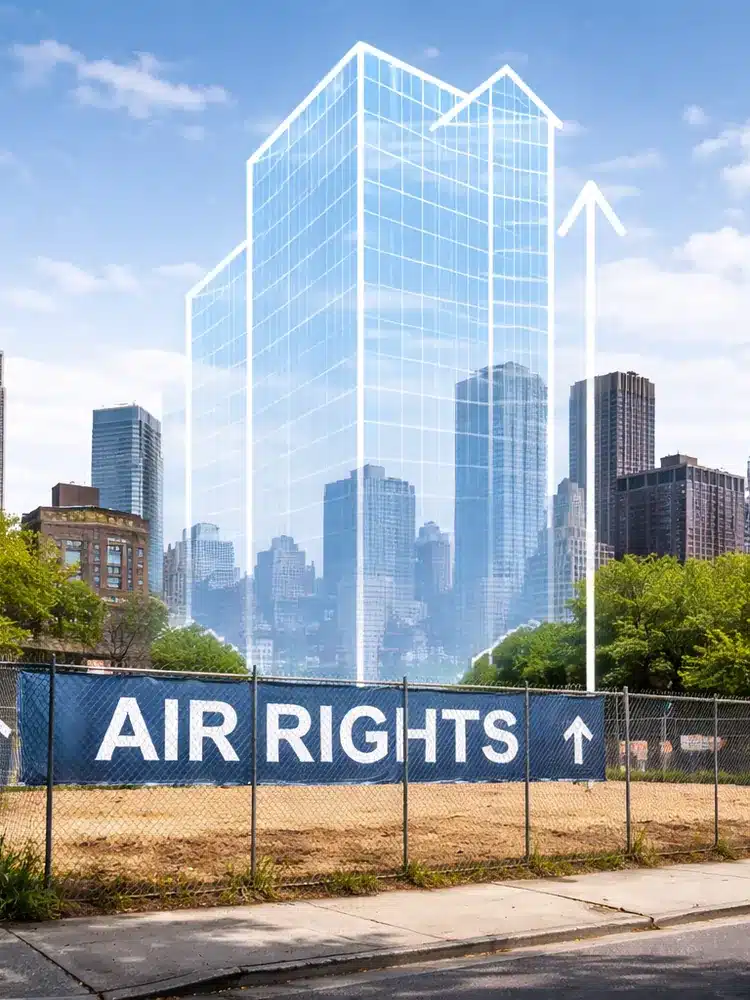
Many NYC properties—especially those with older, low-rise buildings—have unused development rights that add substantial value:
Understanding Air Rights: The difference between what’s currently built and what zoning allows represents air rights. These unused rights can be retained for future development or monetized through sale or transfer.
Transfer Mechanisms: In certain zoning districts and landmark areas, air rights can be transferred to adjacent or nearby properties, creating value even when redevelopment isn’t planned.
Valuation Considerations: Air rights values depend on receiver site demand, zoning regulations, transfer restrictions, and market conditions. Professional analysis is essential to determine their contributory value.
Connect with our team today and we will make sure to help you out with your needs. Call us now or send us a message.