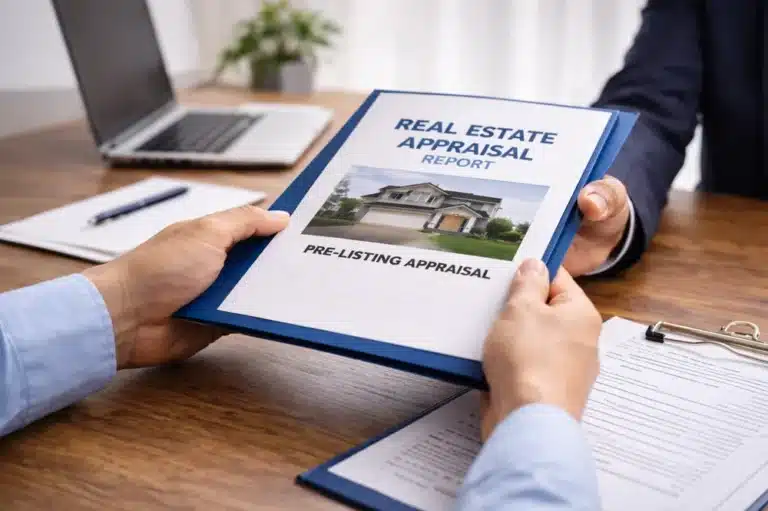
When preparing to sell your property, knowing its true market value is crucial for success. Our experienced appraisers in NYC specialize in pre-listing appraisals, ensuring you’re fully informed about your property’s worth before it hits the market. With our professional appraisal, you can set a competitive and realistic price, attract serious qualified buyers, and potentially speed up the selling process while maximizing your return.
As a trusted property appraisal company in NYC, we provide you with an objective, comprehensive evaluation of your property based on current market conditions and comparable sales data. This professional insight empowers you to make informed decisions for a successful sale, whether you’re selling a condo, co-op, townhouse, multi-family property, or one of the many commercial property types.

Sellers who obtain pre-listing appraisals gain significant advantages in today’s competitive NYC real estate market. Understanding your property’s true market value before listing prevents costly pricing mistakes and positions you for a smoother transaction.
Avoid Overpricing: Properties priced too high sit on the market, becoming stale listings that eventually sell for less than properly priced homes. Days on market matter—buyers question why properties linger, and you lose negotiating leverage with each price reduction.
Prevent Underpricing: Leaving money on the table hurts just as much as overpricing. Our appraisal ensures you capture your property’s full market value, identifying features and improvements that justify premium pricing in your neighborhood.
Eliminate Surprises: Many sales fall apart when the buyer’s appraisal comes in below the contract price. A pre-listing appraisal helps you avoid this scenario by establishing realistic expectations from the start, reducing the risk of renegotiation or deal collapse.
Support Your Asking Price: When buyers question your price, professional appraisal documentation provides objective support for your position. This third-party validation carries more weight than agent opinions or online estimates.

Do you have a unique, renovated, or complex property that requires an expert evaluation to list competitively? Our team delivers a detailed professional appraisal report, giving you a clear, objective understanding of your property's market value based on recent comparable sales, market trends, and property-specific factors.
This insight helps you set a realistic and attractive listing price that generates buyer interest while protecting your financial interests. Unlike automated valuation models or broker price opinions, our appraisals involve physical inspection, detailed analysis, and professional judgment based on NYC market expertise.

We help you identify the key strengths and value drivers of your property that should be leveraged in your marketing strategy and reflected in your pricing. Our analysis highlights recent upgrades, desirable features, location advantages, and market positioning relative to competition.
A well-priced property based on a professional appraisal not only attracts more qualified buyers but also minimizes the risk of prolonged market exposure, multiple price reductions, and the negative perceptions these create. First impressions matter—price it right from the start.

Equipped with a professional appraisal completed before listing, you'll have a strong foundation for price negotiations backed by objective data and expert analysis. This proves particularly valuable when countering lowball offers, responding to buyer appraisal concerns, or justifying your asking price to skeptical buyers.
When the buyer's lender appraisal comes back questioning value, your pre-listing appraisal provides documented support for the contract price, potentially preventing renegotiation or maintaining your negotiating position. This preparation can save thousands in the final sale price.

Major Renovations: You’ve invested significantly in kitchen, bathroom, or system upgrades. A pre-listing appraisal quantifies how these improvements affect market value, ensuring you recover appropriate value for your investment.
Unique Properties: Co-ops with proprietary features, townhouses with special characteristics, or properties with unusual layouts need professional valuation to establish appropriate pricing that reflects their distinctiveness.
Inherited Properties: When selling inherited property, you may have limited knowledge of current market values. A pre-listing appraisal provides objective guidance, helping you price appropriately regardless of historical costs or outdated assessments.
Investment Properties: Multi-family buildings, mixed-use properties, or income-producing real estate require income approach analysis and market positioning that pre-listing appraisals provide.
Divorcing Couples: When both parties must agree on listing price, an independent pre-listing appraisal provides neutral third-party validation that facilitates agreement and moves the sale forward.
FSBO Sellers: For-sale-by-owner sellers lack access to real estate market analysis. Professional appraisal fills this gap, providing the market knowledge needed for competitive pricing.
Estate Sales: Executors and administrators selling estate property benefit from professional appraisals establishing appropriate pricing while documenting value for estate tax and accounting purposes.
Understanding the factors appraisers consider helps you appreciate the comprehensive analysis behind your valuation:
Neighborhood characteristics, proximity to transportation, schools, parks, shopping, and neighborhood trends significantly impact value. External factors such as busy roads, noise levels, and other environmental conditions also affect value. Specific block location within neighborhoods matters in NYC's micro-markets.
Overall maintenance, recent updates, system ages (mechanicals, roof, windows), and modernization affect value. Deferred maintenance reduces value while quality improvements increase it.
Square footage, number of bedrooms/bathrooms, room sizes, ceiling heights, and functional layout all influence marketability and value. Efficient layouts command premiums over awkward configurations.
For condos and co-ops, building amenities (doorman, gym, roof deck), financial health, management quality, and building reputation affect unit values. Well-managed buildings command higher prices.
Current supply and demand, inventory levels, recent sale trends, days on market, and economic factors create the market context for your specific property valuation.
Recent sales of similar properties in your area provide the primary basis for market value depending on property type. Quality and quantity of comparable data affect appraisal reliability.
For commercial and investment properties, rental income, operating expenses, vacancy rates, and net operating income are major components of value and critical to the valuation analysis.
Outdoor space (terrace, balcony, yard), views, parking, storage, high ceilings, original details, or unique amenities add value when properly considered.

New York City real estate presents unique challenges requiring local expertise:
Co-op vs. Condo Dynamics: Co-ops and condos in the same building sell for different prices. Co-op board requirements, flip taxes, maintenance vs. common charges, underlying mortgages, and ownership structure affect value in ways requiring specialized knowledge.
Building Financials: Reserve funds, pending assessments, deferred maintenance, underlying mortgage status, and building debt affect individual unit values. We review financial documents to assess these impacts.
Rent Regulation Issues: Properties with rent-controlled or rent-stabilized units require specialized analysis. Rent regulations dramatically affect income potential and market value for investment properties.
Neighborhood Micro-Markets: NYC real estate is intensely local. Value differences of 20-30% or more exist between blocks within the same neighborhood. We understand these micro-market dynamics.
Transaction Types: Co-op proprietary leases, condo declarations, land leases, air rights, and other NYC-specific ownership structures require appraisers familiar with these nuances.

1. Initial Consultation
We discuss your property, sale timeline, any unique features or concerns, and recent improvements. This helps us understand your situation and determine the appropriate appraisal scope for your needs.
2. Property Inspection
We conduct a thorough inspection of your property, photographing interior and exterior, measuring spaces, noting condition and features, and identifying value drivers and concerns that affect marketability.
3. Market Research & Analysis
We research recent comparable sales in your neighborhood, analyze current listings competing for buyers, study market trends affecting your property type, and gather all data necessary for credible value conclusions.
4. Valuation & Report Preparation
We apply appropriate valuation approaches (typically Sales Comparison for residential, Income Approach for commercial and investment properties), make adjustments for differences between comparables and your property, and prepare a comprehensive report explaining our analysis and value conclusion.
5. Report Delivery & Consultation
We deliver your appraisal report and are available to discuss findings, answer questions, explain the analysis, and help you understand how to use this information in your selling strategy.
Many sellers wonder how professional appraisals differ from the free market analysis provided by listing agents:
Appraisers have no financial stake in your listing price. We provide objective analysis without the conflict of interest inherent when agents want your listing and may inflate values.
Appraisers follow USPAP (Uniform Standards of Professional Appraisal Practice), maintaining professional ethics, methodology, and documentation standards. Our licenses require compliance with these standards.
Appraisals include comprehensive property descriptions, photographs, comparable sales data with adjustments explained, and detailed analysis supporting conclusions. This documentation carries weight in negotiations.
Lenders, attorneys, courts, and other parties recognize professional appraisals as authoritative. This credibility matters when buyers question pricing or lender appraisals differ from contract price.
We consider all three valuation approaches where applicable, analyze market trends deeply, and provide technical expertise beyond typical agent market knowledge.

Once you have your pre-listing appraisal, leverage it strategically throughout the sale:
Setting List Price: Use the appraised value as the foundation for pricing discussions with your agent. You might price slightly above appraisal value to allow negotiation room, but the appraisal prevents unrealistic overpricing.
Marketing Material: Reference the professional appraisal in marketing materials (without disclosing the exact value). Knowing your home “has been professionally appraised” signals seriousness and price confidence to buyers.
Responding to Offers: When negotiating offers, especially lowball offers, reference your professional appraisal as objective third-party support for your pricing position.
Addressing Appraisal Issues: If the buyer’s lender appraisal comes in low, your pre-listing appraisal provides documented basis for challenging that appraisal or negotiating from a position of strength.
Listing Agreement Discussions: Your appraisal gives you confidence in listing price discussions with agents, preventing you from being talked into unrealistic pricing either direction.
Your comprehensive pre-listing appraisal includes:
Thorough interior and exterior inspection with photographs documenting condition, features, and improvements that affect value.
Detailed analysis of recent sales of similar properties in your area, with adjustments explaining value differences between comparables and your property.
Analysis of current market conditions, inventory levels, days on market trends, and pricing patterns affecting your property type and location.
Comprehensive written report explaining methodology, presenting data and analysis, supporting value conclusions, and meeting professional standards for documentation.
Application of appropriate valuation methods (Sales Comparison, Income if applicable, Cost if relevant), with reconciliation explaining the final value conclusion.
Detailed description of your property including size, layout, condition, features, improvements, and characteristics affecting marketability and value.
Follow-up consultation to discuss findings, answer questions, and explain how to use the appraisal in your selling strategy.
Analysis incorporating NYC-specific factors like co-op vs. condo dynamics, building financials, neighborhood micro-markets, and local transaction norms.


The cost of a pre-listing appraisal typically ranges from several thousand dollars depending on property type, size, and complexity. This investment often returns multiples of its cost through better pricing outcomes.
Faster Sales: Properly priced properties sell faster, reducing carrying costs including mortgage, taxes, insurance, utilities, and maintenance during extended marketing periods.
Stronger Offers: Realistic pricing attracts serious buyers making competitive offers. Overpriced properties attract lowball offers from bargain hunters.
Reduced Negotiation: Objective appraisal support reduces buyer price negotiation leverage and prevents leaving money on the table through excessive concessions.
Avoided Deal Failures: Preventing appraisal-related deal failures saves you the time, cost, and emotional toll of restarting the selling process after contracts fall apart.
Peace of Mind: Confidence in your pricing strategy reduces stress throughout the selling process and prevents second-guessing your decisions.

Listing agents provide valuable market knowledge through CMAs, but professional appraisals offer independent verification, detailed documentation, and credibility that can prove valuable in negotiations or if buyer appraisals come in low. Consider an appraisal for unique properties, significant renovations, or when you want objective third-party confirmation.
Appraisals should reflect current market conditions. If you appraise more than 3-6 months before listing, market changes may affect value. In rapidly changing markets, more recent appraisals provide better guidance. Time your appraisal close to your intended listing date.
You can share your appraisal with buyers or their agents if you choose, though it’s not required. Some sellers use it as marketing material demonstrating price justification. However, buyers’ lenders will still order their own appraisals and aren’t bound by your appraisal. Note that the appraiser is bound by confidentiality requirements and can only discuss or disclose information to the client and intended users specified in the appraisal engagement.
A lower-than-expected appraisal provides valuable information preventing overpricing mistakes. You can choose to list at the appraised value, slightly above it with room for negotiation, or investigate whether factors affecting value can be addressed. Realistic expectations prevent costly pricing errors.
If there’s one thing that New Yorkers know for certain, it’s that no two boroughs are exactly alike. That’s why we focus on tailoring our property appraisals with each of our five coverage areas in mind, collecting real-time market data to give you the most accurate evaluation possible for your residential or commercial property.


Pre-listing appraisals work best when coordinated with your real estate agent:
Share the Appraisal: Provide your agent with the appraisal report so they understand the professional basis for value and can adjust their CMA analysis accordingly.
Discuss Pricing Strategy: Use the appraisal as one data point in pricing discussions. Your agent’s knowledge of current buyer behavior and comparable listings complements the appraisal’s market data.
Market the Appraisal: Your agent can reference the professional appraisal in marketing materials and buyer discussions without necessarily disclosing the specific value, demonstrating pricing confidence.
Address Low Appraisals: If buyer appraisals come in low, your agent and you can reference your pre-listing appraisal in discussions with the buyer’s appraiser or lender.
Improvement Documentation: The appraisal might identify improvements based on job filings found on the NYC Department of Buildings website, which can help determine when renovations took place and verify property improvements.

Pre-listing appraisals provide benefits beyond just pricing guidance:
Disclosure Preparation: The appraisal inspection may identify condition issues requiring disclosure, allowing you to address them proactively rather than during buyer inspections.
Improvement Decisions: Understanding which improvements add value versus those that don’t helps you allocate pre-sale preparation budgets effectively.
Marketing Insights: The appraisal identifies your property’s strongest selling points, which can inform marketing emphasis and strategy.
Buyer Confidence: Buyers often feel more confident when sellers demonstrate pricing transparency through professional appraisals.
Tax Planning: For some sellers, especially estates or investment properties, the appraisal provides tax documentation for capital gains calculations or estate tax purposes.