Estate planning or handling the estate of a lost loved one is challenging, especially when you’re still grieving. If you’ve recently inherited a property in the New York City area, or you’re planning for your own estate’s future, our team of appraisers is here to help guide you through this process with compassion and expertise.
We support families by providing reliable, accurate evaluations for both residential and commercial properties, helping them understand the fair market value of their loved one’s property or plan effectively for the future. Together, we give you the insight you need to move forward with your loved one’s wishes, navigate the complexities of estate settlement, and seamlessly work with the court system, IRS, and your legal and financial advisors.
Estate appraisals serve specific legal, tax, and financial purposes that differ from other types of property valuations. Whether you’re the executor of an estate, a beneficiary, an estate planning attorney, or planning your own estate, accurate property valuations are essential for proper estate administration and tax compliance.
The IRS requires fair market value determinations for estate tax purposes when property is transferred through death. Additionally, beneficiaries need accurate valuations to establish cost basis for future capital gains calculations. These appraisals must meet strict IRS guidelines and professional standards to withstand potential audit scrutiny.

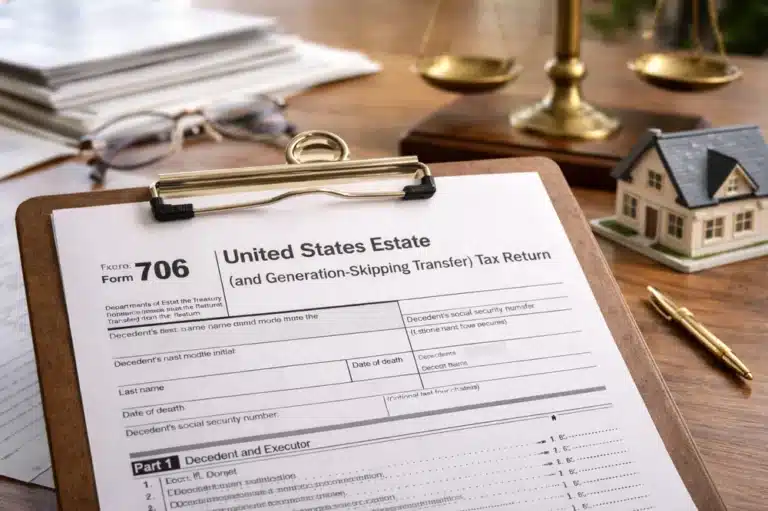
IRS requires property to be valued as of the date of the decedent's death for estate tax return (Form 706) purposes. This establishes both the estate's total value and the beneficiaries' stepped-up cost basis.
Estates may elect to value assets six months after death if it reduces estate tax liability. This requires appraisals as of both dates to determine which is more advantageous.
Individuals creating estate plans need current valuations to understand total estate value, evaluate whether their estate may be subject to estate taxes, and structure gifting or trust strategies effectively.
When multiple beneficiaries inherit property, accurate appraisals ensure fair division of assets, whether properties are sold and proceeds divided or one heir buys out others' interests.
Executors and administrators need appraisals to properly account for estate assets, satisfy court requirements, support fiduciary decisions, and document property values for beneficiaries and legal proceedings.
Trustees managing property assets require periodic valuations for trust accounting, beneficiary reporting, and compliance with trust documents and fiduciary responsibilities.

Creating a plan for your estate is one of the best ways to ensure your final wishes are carried out, even after you've passed. Our property appraisal services help you determine the current market value of your real estate holdings so you can plan your estate appropriately and make informed decisions about asset distribution, trust funding, and tax planning strategies.
Understanding your property values enables you to structure your estate to minimize tax burdens on your heirs, make equitable distributions among beneficiaries, and plan gifting strategies that may reduce your taxable estate while you're still alive. Regular updated appraisals keep your estate plan current as property values change over time.

In many cases, the court or IRS requires a "date of death" valuation to determine the fair market value of a specific property at the precise time the original owner passed away. This valuation serves multiple critical purposes: it establishes the value for estate tax calculations, determines the stepped-up cost basis for beneficiaries, and provides documentation for probate court proceedings.
With the help of our retrospective appraisals, you can get an accurate evaluation of the property's value as of the date of death, regardless of how much time has passed since then. We research historical market data, comparable sales from that specific time period, and property conditions as they existed on the effective date to provide credible, defensible valuations that meet IRS requirements.

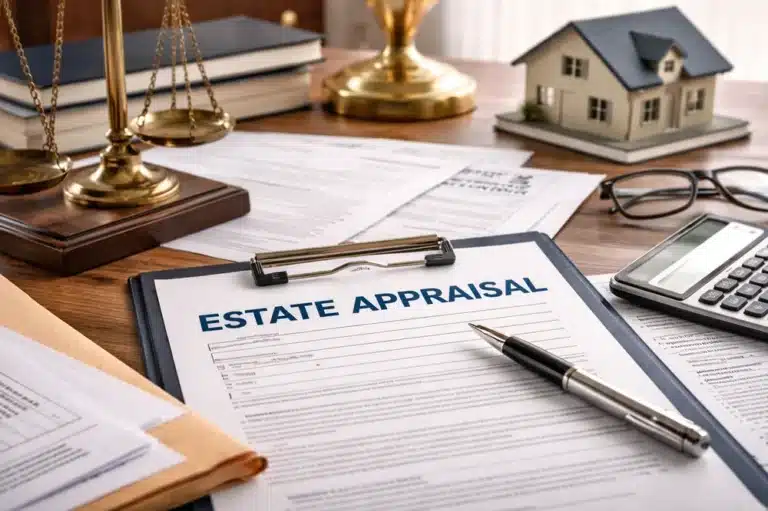
The IRS has specific requirements for estate appraisals that must be met to ensure compliance:
Fair Market Value Standard: Estate appraisals must reflect the price a willing buyer would pay a willing seller, with neither under compulsion and both having reasonable knowledge of relevant facts.
Qualified Appraiser Requirements: The IRS requires appraisals to be performed by qualified appraisers who hold professional designations, have relevant education and experience, and regularly perform appraisals for compensation.
USPAP Compliance: All estate appraisals must comply with the Uniform Standards of Professional Appraisal Practice (USPAP), ensuring professional methodology, objectivity, and comprehensive documentation.
Effective Date Precision: The appraisal must be performed as of the exact date of death (or alternate valuation date), using market data and conditions from that specific time period.
Comprehensive Documentation: IRS-compliant estate appraisals require detailed property descriptions, comparable sales analysis, photographs, methodology explanation, and appraiser credentials to withstand potential audit review.
Understanding stepped-up cost basis is crucial for estate planning and beneficiary tax strategy:
When you inherit property, your cost basis "steps up" to the fair market value on the date of death, rather than the original owner's purchase price. This can result in significant tax advantages.
If the original owner purchased a Manhattan condo for $300,000 in 1995 and it's worth $1,500,000 at death, beneficiaries inherit with a $1,500,000 basis—eliminating $1,200,000 of potential capital gains if sold shortly after inheritance.
The date-of-death appraisal establishes this stepped-up basis. An accurate, well-documented appraisal ensures beneficiaries don't pay unnecessary capital gains taxes when eventually selling the property.
Because stepped-up basis significantly reduces tax liability, the IRS carefully reviews these valuations. Professional appraisals that meet IRS standards are essential to support the claimed basis.
Your comprehensive estate appraisal includes:
Examination of interior and exterior areas where accessible, assessment of condition, mechanical systems, and all features affecting value. For date-of-death appraisals, we consider the property's condition as it existed on the effective date.
For retrospective appraisals, we research comparable sales and market conditions from the effective valuation date, not current conditions, ensuring accuracy for the specific time period required.
Presentation of similar properties that sold around the date of death (or alternate date), with adjustments for differences in size, condition, location, and features relevant to that time period.
The appropriate valuation approach is determined by property type. Residential properties primarily utilize the Sales Comparison Approach, while commercial properties may use the Income Approach as the primary method when income-producing, along with Sales Comparison and Cost approaches as applicable, providing confidence in the final value conclusion.
Comprehensive appraisal report meeting all IRS requirements for estate tax filings, including detailed property description, methodology explanation, appraiser qualifications, and certification of value.
Documentation of appraiser qualifications, certifications, and experience required for IRS compliance and to support the valuation in potential audits.
Visual documentation of property condition, features, and characteristics supporting the valuation, along with maps, floor plans when available, and other relevant materials.
The appraisal serves estate tax filing, probate court proceedings, beneficiary documentation, trust administration, and future sale or refinancing needs.
1. Initial Consultation
We discuss the property, purpose of the appraisal, effective valuation date (date of death or alternate date), who the executor/administrator is, timeline requirements, and any special circumstances affecting the estate.
2. Property Access & Inspection
We coordinate with executors, estate attorneys, or family members to schedule property access. Our inspection is conducted for as long as necessary depending on property complexity, with sensitivity to the family’s circumstances. If the property has already been sold or interior access is not available for any reason, we can still complete a credible appraisal using alternative methods such as exterior-only inspection, property records, historical documentation, and other reliable data sources.
3. Historical Market Research
For date-of-death appraisals, we research comparable sales and market conditions from the specific effective date, gathering historical data to support an accurate retrospective valuation.
4. Valuation & Report Preparation
We apply appropriate valuation approaches using market data from the effective date, reconcile findings, and prepare a comprehensive report—either narrative or form format depending on requirements—that meets IRS and legal standards.
5. Report Delivery & Support
Timeline varies based on complexity, research requirements for retrospective dates, and number of properties involved. We’re available to discuss the report with executors, attorneys, accountants, and beneficiaries as needed.


Executors have fiduciary duties to properly value all estate assets. Our appraisals provide the documentation needed to fulfill these obligations, satisfy court requirements, and protect executors from potential liability for improper valuations.
Many estates include primary residences, vacation properties, rental properties, and investment real estate. We can appraise entire property portfolios as of the same effective date, providing comprehensive documentation for the complete estate.
When the decedent owned property jointly with others or as tenant-in-common, only their ownership share is included in the estate. We determine the value of the entire property and allocate the appropriate percentage to the estate (partial interest valuation).
If the property has significant deferred maintenance or needed repairs at the date of death, we consider this in our valuation, documenting the condition and its impact on fair market value.
Co-ops require special consideration in estate situations, particularly regarding board approval for transfers. Condos, townhouses, and multi-family properties each have unique valuation considerations we address in estate appraisals.
Estate appraisals typically require coordination with multiple professionals:
Estate Attorneys: We work with estate counsel to ensure appraisals meet legal requirements for probate proceedings, satisfy court-ordered valuations, and address specific issues relevant to estate administration.
Estate Accountants & CPAs: Our appraisals are prepared in full compliance with IRS requirements, providing the comprehensive documentation and professional standards accountants need for estate tax returns (Form 706), trust accountings, and final income tax returns for the decedent.
Executors & Administrators: We support fiduciaries by providing clear, defensible valuations that document asset values, support distribution decisions, and protect against beneficiary challenges.
Financial Advisors: Estate planners use our current appraisals to develop tax-efficient estate planning strategies, evaluate gifting options, and structure trusts effectively.
Real Estate Attorneys: When properties will be sold or transferred, our appraisals provide the foundation for pricing decisions, purchase agreements, and title transfer documentation.


Understanding estate tax implications helps with planning and compliance:
Federal Estate Tax Threshold: For 2025, the federal estate tax exemption is $13.61 million per individual ($27.22 million for married couples). Estates exceeding these thresholds require Form 706 filing with property appraisals.
New York State Estate Tax: New York has its own estate tax with a lower exemption threshold of $6.94 million (2024). Accurate property valuations are essential for both federal and state estate tax compliance.
Portability Elections: Married couples can make portability elections to use the deceased spouse’s unused exemption. Even if no estate tax is owed, appraisals may be needed to establish values for the election.
Deductions & Credits: Properly documented property values support estate tax deductions such as charitable contributions, debts, and administrative expenses, potentially reducing overall estate tax liability.
Audit Defense: Well-documented appraisals meeting IRS standards provide strong defense if the estate tax return is selected for audit, protecting executors and beneficiaries from challenges.
Current property appraisals serve important estate planning functions:
Accurate valuations enable strategic gifting to reduce taxable estates while staying within annual and lifetime gift tax exclusions.
Property values determine appropriate funding levels for revocable living trusts, irrevocable trusts, and specialized trusts like QPRTs or CRTs.
Understanding property values helps couples structure ownership, evaluate bypass trust strategies, and plan for portability elections.
Accurate valuations support charitable remainder trusts, bargain sales to charities, and other philanthropic estate planning techniques.
For properties owned by family businesses or partnerships, valuations support buy-sell agreements and succession planning strategies.
Estate appraisals for probate serve specific legal purposes:
Inventory & Accounting: Executors must file inventories listing all estate assets and their values. Professional appraisals document real property values for court submission.
Fiduciary Responsibility: Accurate appraisals protect executors and administrators from beneficiary claims of improper asset valuations or breach of fiduciary duty.
Court-Ordered Appraisals: Some jurisdictions require independent professional appraisals for certain estate proceedings. Our reports meet court standards for admissibility.
Guardianship & Conservatorship: When courts appoint guardians or conservators for property, appraisals establish asset values for bonding requirements and ongoing accountings.
Will Contests: Disputed estates may require multiple appraisals. Our objective, well-documented valuations serve both settlement negotiations and litigation.




Date-of-death appraisals present unique challenges:
Historical Data Research: Finding comparable sales from specific past dates requires extensive research, as recent sales aren’t relevant for retrospective valuations.
Market Condition Analysis: We must analyze market conditions, trends, and factors affecting value as they existed on the effective date, not current conditions.
Property Condition Assessment: For deaths that occurred months or years ago, we reconstruct the property’s condition as of the date of death through photographs, family interviews, and documentation.
Data Availability: Older effective dates may have limited comparable sales data, requiring broader geographic search areas or extended time periods for market analysis.
Credibility & Defense: Retrospective appraisals require extra documentation to demonstrate credibility since we’re valuing conditions that existed in the past, requiring thorough support for all conclusions.
New York City estates present unique property valuation issues:
Co-op Estate Transfers: Co-op boards must approve estate transfers, but cannot unreasonably deny transfers to family members. Board policies, flip taxes, and transfer fees affect net estate value.
Rent-Regulated Properties: Rent-controlled or rent-stabilized properties require specialized valuation approaches considering income restrictions, succession rights, and regulatory constraints affecting marketability and value.
Multi-Family Properties: NYC’s diverse multi-family housing stock—from two-family homes to large apartment buildings—requires expertise in income approaches and rent roll analysis for accurate estate valuations.
Historic Properties: Properties in historic districts or with landmark status face development restrictions affecting value. These constraints must be considered in estate appraisals.
Property Tax Implications: NYC’s complex property tax system affects estate planning and beneficiary decisions. Understanding tax class changes and assessment impacts is important for comprehensive estate advice.


Estate appraisals often involve time-sensitive requirements:
Form 706 Deadline: Federal estate tax returns are due nine months after death (with possible six-month extension). Appraisals must be completed well in advance to allow time for tax preparation.
Probate Court Deadlines: Courts may impose specific deadlines for estate inventories and accountings requiring property appraisals.
Sale Planning: If the estate plans to sell property, appraisals help set realistic pricing and timing expectations, informing decisions about whether to sell immediately or wait.
Our Timelines: Completion time varies based on effective date (current vs. historical), property complexity, access issues, and research requirements for retrospective valuations.
Expedited Service: When deadlines are tight, we can accommodate rush requests with expedited service, though this may be limited by the research required for historical effective dates.

While the appraisal can be done anytime, obtaining it within a few months of death makes the process easier—property condition is documented while fresh in memory, and you’ll have the valuation for estate tax filing deadlines.
No. The IRS requires professional appraisals for estate tax purposes. Property tax assessments don’t reflect fair market value and aren’t acceptable substitutes for IRS-compliant appraisals.
The sale price after death doesn’t determine the date-of-death value. Market conditions may have changed, or the sale may have been under duress or at non-arm’s-length terms. A professional appraisal of value as of the date of death is still required. We can still perform the appraisal even without access to the property by utilizing extraordinary assumptions, along with public records, historical online data, documentation provided by the estate, and other available information to support the valuation.
Each property requires its own valuation, though multiple properties can be appraised by the same appraiser and included in a single comprehensive report or separate reports as needed for your situation.
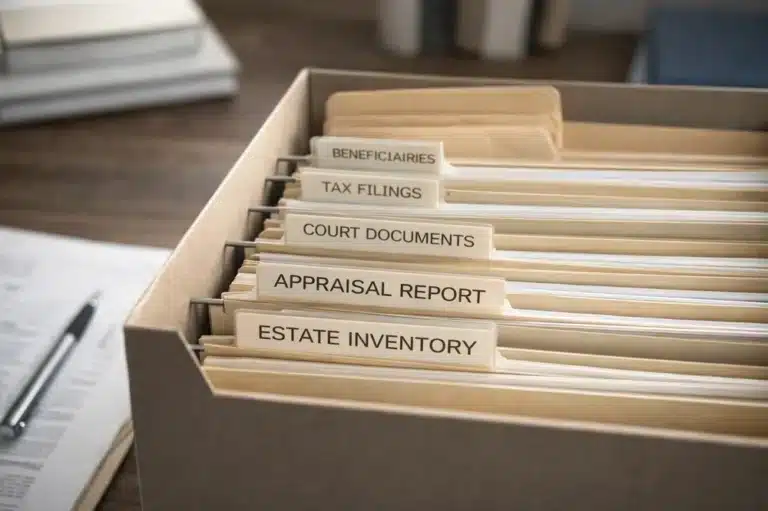
Once you receive your estate appraisal:
Estate Tax Filing: Provide the appraisal to your estate attorney or CPA preparing Form 706 (federal estate tax return) and any required state estate tax returns.
Probate Court: Submit appraisals with estate inventories, accountings, and other required court filings as directed by your estate attorney.
Beneficiary Documentation: Distribute copies to beneficiaries establishing their stepped-up cost basis for future tax reporting when they eventually sell or transfer the property.
Property Sale: If selling, use the appraisal to guide listing price decisions, evaluate offers, and document transactions for estate accounting purposes.
Retain Records: Keep appraisal reports permanently in estate records. Beneficiaries may need this documentation years later when selling inherited property for capital gains tax purposes.
Connect with our team today and we will make sure to help you out with your needs. Call us now or send us a message.